


Can ceramic fiber blanket be used in electrical insulation applications?
As a supplier of ceramic fiber blankets, I am often asked whether our product can be used in electrical insulation applications. In this blog post, I will explore this question in detail, drawing on scientific knowledge and practical experience.
Properties of Ceramic Fiber Blanket
Ceramic fiber blankets are made from high - purity alumina - silica ceramic fibers. These fibers are formed through a special manufacturing process that results in a lightweight, flexible, and highly porous material.
One of the most notable properties of ceramic fiber blankets is their excellent thermal insulation performance. They have low thermal conductivity, which means they can effectively reduce heat transfer. This property makes them widely used in various high - temperature industrial applications, such as in Thermal Insulation Blanket for furnaces and kilns.
In addition to thermal insulation, ceramic fiber blankets also have good chemical stability. They are resistant to most chemicals, except for strong acids and alkalis. This chemical resistance allows them to maintain their performance in harsh chemical environments.
Electrical Insulation Characteristics
When it comes to electrical insulation, several factors need to be considered. Firstly, electrical resistivity is a key parameter. Ceramic fiber blankets have relatively high electrical resistivity, which means they can impede the flow of electric current. This high resistivity is due to the non - conductive nature of the alumina - silica ceramic fibers.
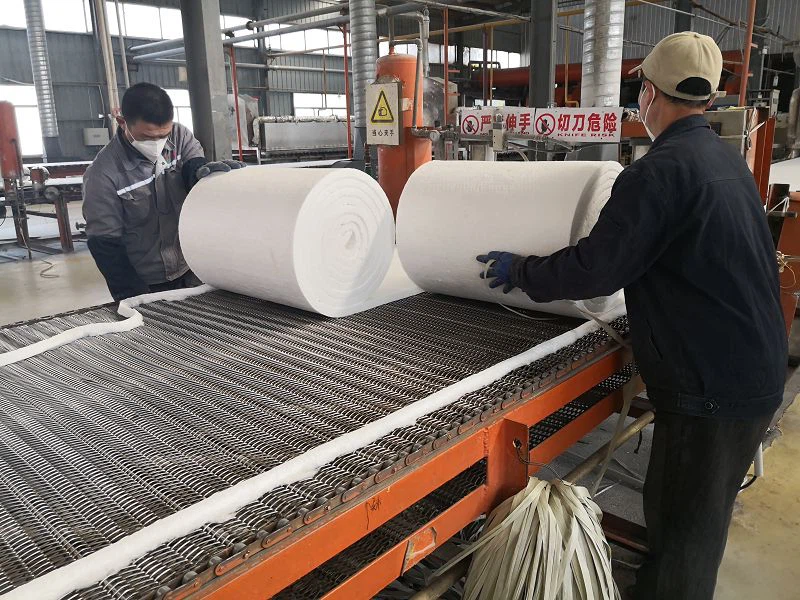

Secondly, dielectric strength is another important characteristic. Dielectric strength refers to the maximum electric field that a material can withstand without breaking down. Ceramic fiber blankets generally have a satisfactory dielectric strength, which enables them to function as an electrical insulator under normal operating conditions.
However, it is important to note that the electrical insulation performance of ceramic fiber blankets can be affected by environmental factors. For example, moisture can significantly reduce their electrical resistivity. When the ceramic fiber blanket absorbs moisture, the water molecules can provide conductive paths for electric current, thereby reducing its insulating ability. Therefore, in electrical insulation applications, it is crucial to ensure that the ceramic fiber blanket is kept dry.
Applications in Electrical Insulation
Ceramic fiber blankets have found some applications in the field of electrical insulation. One common application is in electrical transformers. In transformers, heat is generated during operation, and effective thermal insulation is required to maintain the proper temperature of the transformer components. At the same time, electrical insulation is also essential to prevent short - circuits. Ceramic fiber blankets can meet both requirements. They can insulate the heat generated by the transformer coils and also provide electrical insulation between different parts of the transformer.
Another application is in high - voltage switchgear. High - voltage switchgear needs reliable electrical insulation to ensure safe operation. Ceramic fiber blankets can be used as insulation materials in switchgear to prevent electrical breakdown and arcing. They can also help to reduce heat loss, improving the overall efficiency of the switchgear.
In some industrial heating equipment, such as electric furnaces, ceramic fiber blankets can be used as both thermal and electrical insulators. They can insulate the heating elements from the surrounding environment, reducing heat dissipation and also preventing electrical leakage. For more information on using ceramic fiber blankets in high - temperature equipment like kilns, you can refer to Ceramic Fiber Blanket for Kiln.
Limitations and Precautions
Despite their potential in electrical insulation applications, ceramic fiber blankets also have some limitations. As mentioned earlier, their electrical insulation performance can be affected by moisture. In humid environments, additional protective measures need to be taken, such as using moisture - proof coatings or enclosures.
Another limitation is their mechanical strength. Ceramic fiber blankets are relatively fragile and can be easily damaged by mechanical forces. In applications where the blanket may be subject to vibration or impact, proper support and protection structures should be designed to prevent damage to the insulation.
In high - frequency electrical applications, the performance of ceramic fiber blankets may also be affected. The high - frequency electric fields can cause dielectric losses in the ceramic fiber material, which may lead to heating and reduced insulation efficiency. Therefore, for high - frequency applications, careful consideration should be given to the suitability of ceramic fiber blankets.
Quality Assurance of Our Ceramic Fiber Blankets
As a supplier, we are committed to providing high - quality ceramic fiber blankets for electrical insulation applications. Our products are manufactured using advanced production technology and strict quality control measures.
We use high - purity raw materials to ensure the excellent electrical insulation and thermal insulation performance of our ceramic fiber blankets. Our manufacturing process is carefully monitored to control the fiber diameter, density, and other parameters, which are crucial for the overall performance of the product.
Before shipping, each batch of ceramic fiber blankets undergoes comprehensive quality testing. We test the electrical resistivity, dielectric strength, thermal conductivity, and other key properties to ensure that they meet the relevant standards and customer requirements. For high - temperature applications, our 2300F Ceramic Fibre Blanket has been proven to have excellent performance.
Conclusion
In conclusion, ceramic fiber blankets can be used in electrical insulation applications due to their high electrical resistivity and satisfactory dielectric strength. They have found applications in electrical transformers, high - voltage switchgear, and industrial heating equipment. However, their performance can be affected by moisture, mechanical forces, and high - frequency electric fields.
As a professional ceramic fiber blanket supplier, we can provide high - quality products and technical support for your electrical insulation needs. If you are interested in our products or have any questions about using ceramic fiber blankets in electrical insulation applications, please feel free to contact us for further discussion and procurement negotiation.
References
- "Handbook of Thermal Insulation Materials", edited by John Smith, 2018.
- "Electrical Insulation Engineering", written by David Brown, 2020.
- "Ceramic Materials Science and Engineering", by Maria Garcia, 2019.


