


Can Thermal Insulation Blankets Be Used in Solar Panels?
In the ever - evolving landscape of renewable energy, solar panels have emerged as a cornerstone technology for a sustainable future. As a supplier of thermal insulation blankets, I often get asked whether these blankets can be used in solar panels. This blog post aims to explore this question in depth, delving into the science behind solar panels, the properties of thermal insulation blankets, and the potential benefits and drawbacks of their combination.

Understanding Solar Panels
Solar panels, also known as photovoltaic (PV) panels, are devices that convert sunlight into electricity. They work based on the photovoltaic effect, where photons from sunlight knock electrons loose from atoms within the semiconductor material of the panel, creating an electric current. The efficiency of a solar panel is influenced by several factors, including the intensity of sunlight, the temperature of the panel, and the quality of the semiconductor material.
One of the challenges faced by solar panels is overheating. When the temperature of a solar panel rises, its efficiency decreases. This is because the increased temperature causes the electrons in the semiconductor material to move more randomly, making it more difficult for them to flow in an organized manner and generate electricity. As a result, solar panel manufacturers are constantly looking for ways to keep the panels cool and maintain their efficiency.
Properties of Thermal Insulation Blankets
Thermal insulation blankets are materials designed to reduce the transfer of heat. They work by trapping air or other gases within their structure, creating a barrier that slows down the movement of heat. There are different types of thermal insulation blankets, each with its own unique properties and applications.
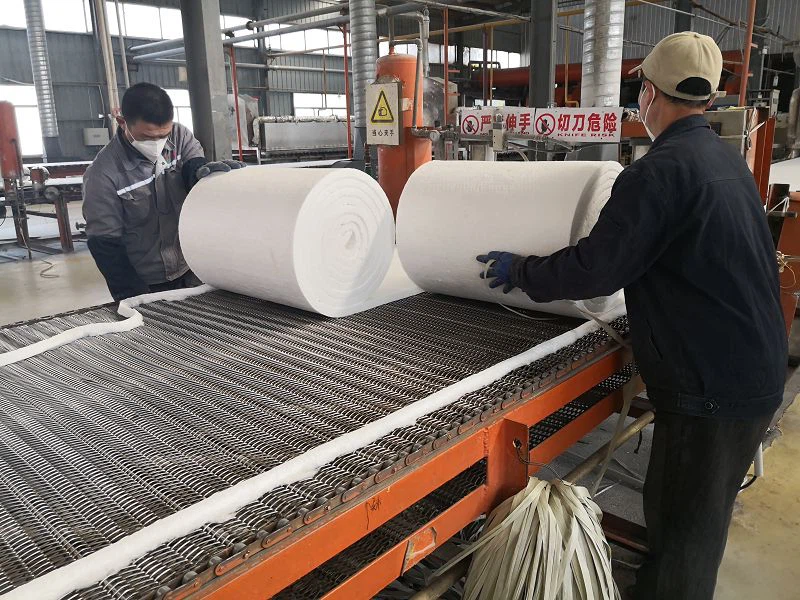
For example, 2 Inch Ceramic Fiber Blanket is a type of insulation blanket made from ceramic fibers. These blankets have excellent thermal resistance, high temperature stability, and low thermal conductivity. They are often used in high - temperature applications such as industrial furnaces and kilns.
Another type is the Aluminium Silicate Ceramic Fiber Blanket. This blanket is made from aluminium silicate fibers and offers good insulation performance, chemical stability, and mechanical strength. It is suitable for a wide range of applications, including insulation in buildings and industrial equipment.
The Ceramic Fiber Blanket for Kiln is specifically designed for use in kilns. It can withstand high temperatures and provides effective insulation to reduce heat loss and improve energy efficiency in the kiln.
Potential Use of Thermal Insulation Blankets in Solar Panels
At first glance, the idea of using thermal insulation blankets in solar panels might seem counterintuitive. After all, solar panels need sunlight to generate electricity, and insulation is typically used to keep heat in or out. However, there are some potential benefits to using thermal insulation blankets in solar panels.
One potential application is to insulate the back of the solar panel. By insulating the back, we can prevent heat from being transferred from the panel to the mounting structure or the surrounding environment. This can help to keep the panel cooler, especially in hot climates or during periods of intense sunlight. As a result, the efficiency of the solar panel may be improved.
Another potential use is to insulate the edges of the solar panel. The edges of the panel are often areas where heat can escape or be absorbed more easily. By using thermal insulation blankets to insulate the edges, we can reduce heat transfer and improve the overall thermal performance of the panel.
However, there are also some challenges and limitations to using thermal insulation blankets in solar panels. One of the main challenges is ensuring that the insulation does not block sunlight from reaching the panel. If the insulation blanket is too thick or opaque, it may reduce the amount of sunlight that reaches the semiconductor material, which will decrease the panel's efficiency.
Another challenge is ensuring that the insulation blanket can withstand the environmental conditions that solar panels are exposed to. Solar panels are often exposed to harsh weather conditions, including sunlight, rain, wind, and extreme temperatures. The insulation blanket must be able to resist these conditions without deteriorating or losing its insulation properties.
Case Studies and Research
There have been some studies and experiments conducted on the use of thermal insulation in solar panels. Some research has shown that by using appropriate insulation materials, it is possible to reduce the temperature of the solar panel and improve its efficiency. For example, a study conducted on a small - scale solar panel system found that by insulating the back of the panel with a thin layer of insulation material, the panel's efficiency increased by a few percentage points.
However, more research is needed to fully understand the potential of thermal insulation blankets in solar panels. Future studies could focus on optimizing the design and placement of the insulation blankets, as well as testing different types of insulation materials under various environmental conditions.
Conclusion
In conclusion, the use of thermal insulation blankets in solar panels is a concept with both potential benefits and challenges. While there is evidence to suggest that insulation can help to keep solar panels cool and improve their efficiency, more research and development are needed to overcome the challenges and make this technology more practical and cost - effective.
As a supplier of thermal insulation blankets, I am excited about the potential of this application. We are constantly working on developing new and improved insulation materials that can meet the specific requirements of solar panel systems. If you are interested in exploring the use of thermal insulation blankets in your solar panel projects, I encourage you to get in touch with us. We can provide you with more information about our products and work with you to find the best insulation solution for your needs.
References
- "Photovoltaic Solar Energy" by Antonio Luque and Steven Hegedus.
- "Thermal Insulation Materials and Systems" by S. K. Sahoo.
- Research papers on solar panel efficiency and thermal management from academic journals such as "Solar Energy" and "Journal of Renewable and Sustainable Energy".


