


In the realm of insulation materials, making the right choice is crucial for a variety of applications, from industrial settings to residential buildings. As a supplier of Thermal Insulation Blanket, I've witnessed firsthand the diverse needs of customers and the importance of understanding the pros and cons of different insulation options. In this blog post, I'll compare thermal insulation blankets to other commonly used insulation materials, shedding light on their unique features and benefits.
1. Fiberglass Insulation
Fiberglass insulation is one of the most widely used insulation materials in the market. It consists of fine glass fibers that trap air, reducing heat transfer through conduction and convection. Fiberglass insulation is known for its affordability, ease of installation, and fire resistance. However, it also has some drawbacks.

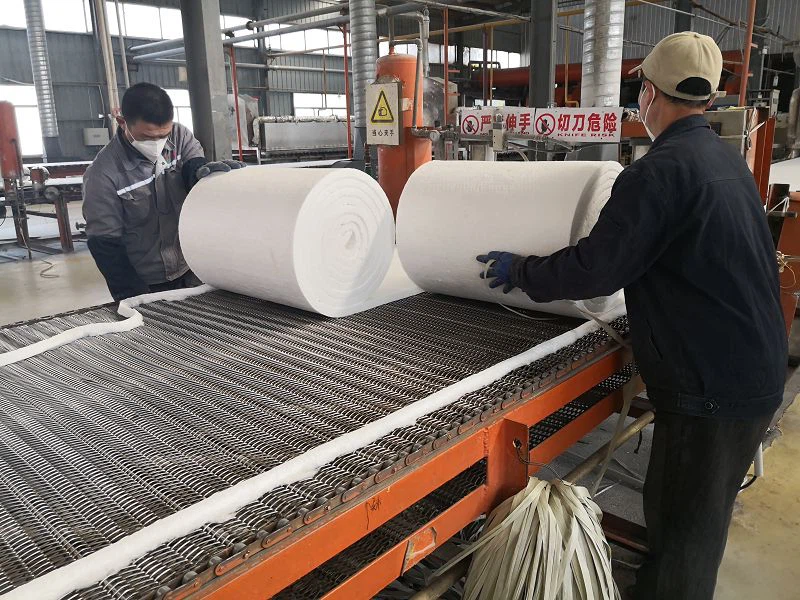
One of the main issues with fiberglass insulation is its potential health hazards. The fine glass fibers can become airborne and cause irritation to the skin, eyes, and respiratory system if inhaled. Proper protective equipment is required during installation to minimize these risks. In contrast, thermal insulation blankets, such as Aluminium Silicate Ceramic Fiber Blanket, are made from ceramic fibers, which are generally considered safer to handle.
In terms of thermal performance, fiberglass insulation has a relatively good R - value (a measure of thermal resistance). However, thermal insulation blankets often have higher R - values, especially at high temperatures. This makes them more suitable for applications where extreme heat needs to be contained, such as in industrial furnaces and kilns. For example, a Ceramic Fiber Blanket for Kiln can withstand temperatures up to 1260°C (2300°F) or even higher, while fiberglass insulation may start to degrade at much lower temperatures.
2. Mineral Wool Insulation
Mineral wool insulation is another popular choice, made from natural or synthetic minerals. It has good fire resistance, sound absorption properties, and thermal insulation capabilities. Mineral wool can be used in both residential and industrial applications.
Similar to fiberglass, mineral wool can also pose health risks if the fibers are inhaled. The installation process requires careful handling to prevent fiber release. Thermal insulation blankets, on the other hand, are less likely to cause such health concerns due to their different fiber composition.
When it comes to thermal performance, mineral wool has a decent R - value. However, thermal insulation blankets can offer better insulation in high - temperature environments. Mineral wool may lose its insulating properties at elevated temperatures, while thermal insulation blankets maintain their performance. Additionally, thermal insulation blankets are often lighter in weight, which can be an advantage in applications where weight is a concern, such as in aerospace or automotive industries.
3. Polystyrene Insulation
Polystyrene insulation comes in two main types: expanded polystyrene (EPS) and extruded polystyrene (XPS). EPS is a lightweight and cost - effective insulation material, while XPS has a higher density and better moisture resistance.
One of the major limitations of polystyrene insulation is its low melting point. It can catch fire easily and release toxic fumes when burned. This makes it unsuitable for applications where fire safety is a top priority. Thermal insulation blankets, especially those made from ceramic fibers, are non - flammable and can provide excellent fire protection.
In terms of thermal performance, polystyrene insulation has a good R - value for normal temperature applications. But in high - temperature scenarios, it fails to perform. Thermal insulation blankets are designed to handle high temperatures, making them a better choice for industrial processes and high - heat equipment.
4. Spray Foam Insulation
Spray foam insulation is a versatile option that can be used to seal gaps and provide insulation. It expands upon application, filling even the smallest crevices. Spray foam insulation can provide an airtight seal, which helps to reduce energy loss due to air leakage.
However, spray foam insulation has some drawbacks. The installation process requires specialized equipment and trained professionals. It can also be expensive compared to other insulation materials. Additionally, some types of spray foam insulation may off - gas harmful chemicals during the curing process.
Thermal insulation blankets are easier to install, requiring only basic tools. They can be cut to size and wrapped around the object to be insulated. In terms of thermal performance, while spray foam insulation can provide good insulation in normal temperature conditions, thermal insulation blankets are more suitable for high - temperature applications.
Advantages of Thermal Insulation Blankets
- High - Temperature Resistance: As mentioned earlier, thermal insulation blankets can withstand extremely high temperatures, making them ideal for industrial applications such as foundries, forges, and heat - treating furnaces.
- Lightweight: Their low weight makes them easy to handle and install, reducing labor costs and the overall weight of the insulated structure.
- Flexibility: Thermal insulation blankets can be easily cut, shaped, and wrapped around irregularly shaped objects, providing a customized insulation solution.
- Low Thermal Conductivity: They have a low thermal conductivity, which means they can effectively reduce heat transfer and save energy.
- Good Chemical Resistance: Many thermal insulation blankets are resistant to chemicals, making them suitable for use in harsh chemical environments.
Applications of Thermal Insulation Blankets
- Industrial Furnaces and Kilns: Ceramic Fiber Blanket for Kiln is widely used to line the interior of kilns and furnaces, reducing heat loss and improving energy efficiency.
- Power Generation: Thermal insulation blankets are used in power plants to insulate pipes, boilers, and turbines, helping to maintain high - temperature steam and reduce energy waste.
- Automotive Industry: They can be used in exhaust systems and engine compartments to reduce heat transfer and protect surrounding components.
- Aerospace Industry: Due to their lightweight and high - temperature resistance, thermal insulation blankets are used in aircraft engines and other high - heat areas.
Conclusion
Thermal insulation blankets offer unique advantages over other insulation materials, especially in high - temperature applications. Their high - temperature resistance, lightweight, flexibility, and low thermal conductivity make them a superior choice for many industrial and specialized applications. While other insulation materials like fiberglass, mineral wool, polystyrene, and spray foam have their own merits in certain situations, thermal insulation blankets stand out when it comes to extreme heat conditions.
If you're looking for a reliable insulation solution for your high - temperature needs, I encourage you to consider our Thermal Insulation Blanket. Our products are manufactured to the highest quality standards, ensuring excellent performance and durability. We also offer customized solutions to meet your specific requirements. If you have any questions or would like to discuss your insulation needs further, please feel free to contact us for a detailed consultation and procurement negotiation.
References
- ASHRAE Handbook of Fundamentals. American Society of Heating, Refrigerating and Air - Conditioning Engineers.
- Insulation Materials: Properties and Performance. McGraw - Hill Professional.
- Industrial Insulation Technology. Elsevier.


