


Hey there! As a supplier of ceramic fiber blankets, I often get asked how our products stack up against aerogel insulation materials. So, I thought I'd break it down in this blog post to give you a better understanding of the differences and similarities between the two.
What are Ceramic Fiber Blankets and Aerogel Insulation Materials?
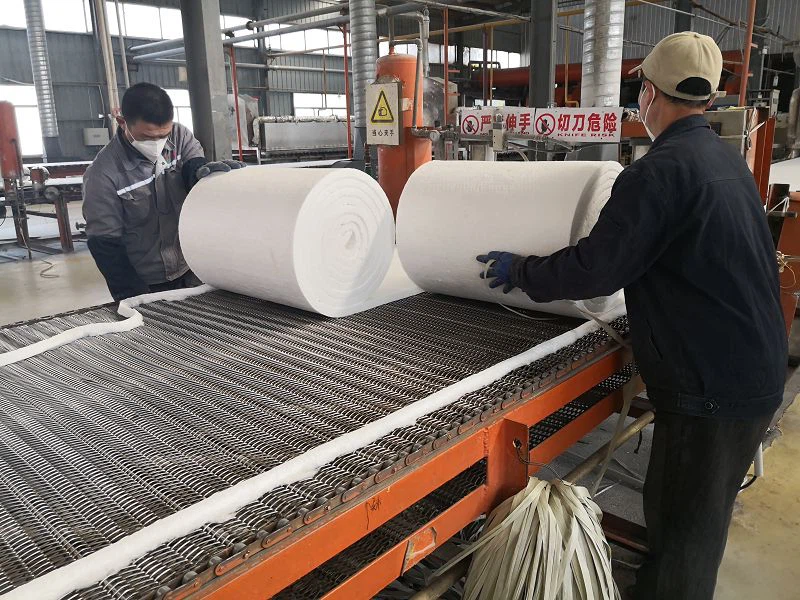
Let's start with the basics. Ceramic fiber blankets are made from ceramic fibers that are spun into a blanket-like form. They're known for their high-temperature resistance, low thermal conductivity, and excellent insulation properties. These blankets are commonly used in various industrial applications, like furnaces, kilns, and boilers, where high temperatures are involved. You can check out our 2300F Ceramic Fibre Blanket and Ceramic Fiber Blanket for Kiln for more details on our product range.
On the other hand, aerogel is a synthetic porous ultralight material derived from a gel, where the liquid component of the gel has been replaced with a gas. It's often referred to as "frozen smoke" because of its translucent appearance. Aerogel insulation materials are super-lightweight and have an extremely low thermal conductivity, making them great for insulation in a wide range of applications, from aerospace to construction.
Thermal Performance
One of the most important factors when it comes to insulation materials is their thermal performance. Both ceramic fiber blankets and aerogel insulation materials are designed to reduce heat transfer, but they do it in different ways.
Ceramic fiber blankets have a relatively high-temperature resistance. They can withstand temperatures up to 2300°F (1260°C) or even higher, depending on the specific type of ceramic fiber used. This makes them ideal for applications where high temperatures are present, such as industrial furnaces and kilns. The fibers in the blanket trap air pockets, which act as a barrier to heat transfer. Our Insulation Ceramic Fiber Blanket is a great example of a product that offers excellent thermal insulation in high-temperature environments.
Aerogel insulation materials, on the other hand, have an extremely low thermal conductivity. In fact, they have one of the lowest thermal conductivities of any known solid material. This means that they can provide excellent insulation even in thin layers. Aerogel can be used in a variety of applications, including building insulation, where it can help reduce energy consumption by keeping buildings warm in the winter and cool in the summer.
Physical Properties
When it comes to physical properties, there are some notable differences between ceramic fiber blankets and aerogel insulation materials.
Ceramic fiber blankets are relatively flexible and can be easily cut and shaped to fit different applications. They're also quite durable and can withstand mechanical stress to a certain extent. However, they can be a bit brittle, and care needs to be taken when handling them to avoid breakage.

Aerogel insulation materials, on the other hand, are very lightweight and fragile. They're often sold in the form of panels or blankets, but they can be easily damaged if not handled properly. Aerogel is also more expensive than ceramic fiber blankets, which can be a factor to consider when choosing an insulation material.
Environmental Impact
Another important factor to consider is the environmental impact of the insulation materials.
Ceramic fiber blankets are made from natural minerals, which makes them relatively environmentally friendly. However, the production process can be energy-intensive, and there are some concerns about the potential health risks associated with inhaling ceramic fibers. It's important to follow proper safety procedures when handling ceramic fiber blankets to minimize these risks.
Aerogel insulation materials are also relatively environmentally friendly. They're made from silica, which is a natural and abundant material. However, the production process can be complex and energy-intensive, and there are some concerns about the use of chemicals in the manufacturing process.
Cost
Cost is always a major consideration when choosing an insulation material. Ceramic fiber blankets are generally more affordable than aerogel insulation materials. The cost of ceramic fiber blankets depends on factors such as the thickness, density, and temperature rating of the blanket. Our ceramic fiber blankets offer a cost-effective solution for high-temperature insulation applications.
Aerogel insulation materials, on the other hand, are more expensive. The high cost is due to the complex production process and the limited availability of aerogel. However, in some applications where space is limited and high-performance insulation is required, the cost of aerogel may be justified.
Applications
Both ceramic fiber blankets and aerogel insulation materials have a wide range of applications.
Ceramic fiber blankets are commonly used in industrial applications, such as furnaces, kilns, boilers, and incinerators. They're also used in the automotive industry for exhaust insulation and in the aerospace industry for thermal protection.
Aerogel insulation materials are used in a variety of applications, including building insulation, aerospace, and transportation. In the building industry, aerogel can be used to insulate walls, roofs, and floors, helping to reduce energy consumption and improve the comfort of the building. In the aerospace industry, aerogel is used for thermal insulation in spacecraft and aircraft.
Conclusion
So, which insulation material is better - ceramic fiber blankets or aerogel insulation materials? Well, it depends on your specific needs and application.
If you're looking for a cost-effective insulation solution for high-temperature applications, ceramic fiber blankets are a great choice. They offer excellent thermal performance, are relatively easy to install, and can withstand high temperatures. Check out our 2300F Ceramic Fibre Blanket and Ceramic Fiber Blanket for Kiln to see if they're suitable for your project.
On the other hand, if you need a high-performance insulation material for applications where space is limited and weight is a concern, aerogel insulation materials may be the better option. However, be prepared to pay a higher price for this advanced technology.
If you're still not sure which insulation material is right for you, feel free to reach out to us. We're here to help you make the best decision for your needs. Whether you're an industrial manufacturer, a builder, or a DIY enthusiast, we can provide you with the information and support you need to choose the right insulation material for your project.
References
- "Ceramic Fiber Insulation: Properties, Applications, and Future Trends" - Journal of Thermal Insulation
- "Aerogel Insulation: A Review of Properties, Applications, and Challenges" - International Journal of Thermal Sciences


