


Refractory ceramic fiber board is a crucial material in various high - temperature industrial applications. As a supplier of refractory ceramic fiber board, I am delighted to share the detailed process of how this remarkable product is made.
Raw Material Selection
The first and most fundamental step in manufacturing refractory ceramic fiber board is the selection of raw materials. High - quality alumina and silica are the primary ingredients. These materials are carefully sourced to ensure they meet the strict purity and chemical composition requirements. Alumina provides excellent heat resistance and mechanical strength, while silica contributes to the fiber's flexibility and insulation properties.
The purity of these raw materials significantly impacts the final performance of the refractory ceramic fiber board. For instance, impurities can reduce the fiber's melting point and increase its thermal conductivity, which are undesirable characteristics in high - temperature insulation applications. Therefore, suppliers often work closely with reliable raw material providers to obtain the purest possible alumina and silica.
Fiber Formation
Once the raw materials are selected, they are mixed in specific proportions. This mixture is then fed into a melting furnace, where it is heated to extremely high temperatures, typically around 2000°C. At this temperature, the alumina - silica mixture melts into a viscous liquid.
There are two main methods for converting this molten liquid into fibers: the blowing method and the spinning method. In the blowing method, high - pressure air or steam is used to blow the molten liquid through small nozzles. The force of the air or steam stretches the liquid into fine fibers. On the other hand, the spinning method involves rotating a spinneret filled with the molten liquid. Centrifugal force causes the liquid to be ejected through tiny holes in the spinneret, forming fibers.
The fibers produced by these methods are extremely fine, with diameters ranging from a few micrometers to tens of micrometers. These fine fibers have a large surface - to - volume ratio, which contributes to their excellent insulation properties.
Collection and Classification
After the fibers are formed, they are collected on a conveyor belt or a collection chamber. During this process, the fibers entangle with each other, forming a fluffy mass. This mass is then subjected to a classification process to separate the fibers based on their length and diameter.
Fibers of different lengths and diameters have different properties. Longer and finer fibers generally have better insulation performance, while shorter and coarser fibers may be more suitable for applications where mechanical strength is a priority. By classifying the fibers, manufacturers can ensure that the final refractory ceramic fiber board meets the specific requirements of different customers.
Board Formation
Once the fibers are classified, they are mixed with a binder solution. The binder is an important component as it helps to hold the fibers together and gives the board its shape and strength. There are various types of binders available, including organic and inorganic binders. Organic binders are typically used for boards that will be used at relatively low temperatures, while inorganic binders are preferred for high - temperature applications.
The fiber - binder mixture is then poured into a mold. A vacuum is applied to the mold to remove excess water and compact the fibers. This process is known as vacuum forming. The vacuum helps to ensure that the fibers are evenly distributed throughout the board and that the board has a uniform density.
After the vacuum forming process, the board is removed from the mold and dried in an oven. The drying process is carefully controlled to remove the remaining moisture and to cure the binder. The temperature and time of the drying process depend on the type of binder used and the thickness of the board.
Cutting and Finishing
Once the board is dried, it is cut to the desired size and shape. Advanced cutting machines are used to ensure precise dimensions. The edges of the board are also finished to remove any rough or sharp parts.
In addition to standard rectangular boards, we also offer Ceramic Fiber Vacuum Formed Special Shape. These special - shaped boards are custom - made to meet the specific needs of our customers. They can be used in complex industrial equipment where standard boards cannot be easily installed.
Quality Control
Quality control is an integral part of the manufacturing process. At every stage, from raw material selection to the final product, strict quality control measures are implemented. The physical and chemical properties of the raw materials are tested regularly to ensure they meet the specifications. During the fiber formation process, the diameter and length of the fibers are monitored to ensure consistency.
For the finished refractory ceramic fiber boards, various tests are conducted. These include thermal conductivity tests, strength tests, and chemical composition analysis. Only boards that pass all the quality tests are allowed to leave the factory.
Applications of Refractory Ceramic Fiber Board
Refractory ceramic fiber boards have a wide range of applications in various industries. In the metallurgical industry, they are used for lining furnaces, ladles, and other high - temperature equipment. The excellent insulation properties of the boards help to reduce heat loss and improve energy efficiency.
In the petrochemical industry, refractory ceramic fiber boards are used in reactors, heaters, and pipelines. They can withstand high temperatures and corrosive environments, providing reliable insulation and protection.
We offer different types of refractory ceramic fiber boards to meet the diverse needs of our customers. For example, our High Temperature Ceramic Fiber Board is designed for applications where extremely high temperatures are involved. It can maintain its insulation performance even at temperatures above 1000°C.
Our 1/4 Inch Ceramic Fiber Board is a popular choice for applications where a thinner insulation layer is required. It is lightweight and easy to install, making it suitable for a variety of equipment.
Why Choose Our Refractory Ceramic Fiber Board
As a supplier, we are committed to providing high - quality refractory ceramic fiber boards. Our products are manufactured using the latest technology and strict quality control measures. We have a team of experienced engineers and technicians who can provide professional advice and support to our customers.
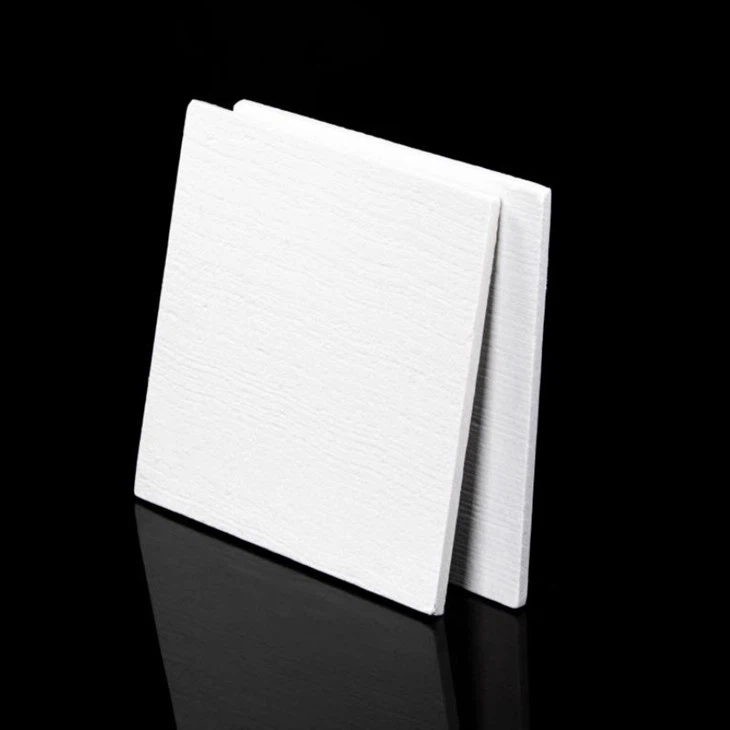

We understand that every customer has unique requirements. That's why we offer a wide range of products, including different sizes, shapes, and grades of refractory ceramic fiber boards. Whether you need a standard board or a custom - made special - shaped board, we can meet your needs.
If you are in the market for refractory ceramic fiber boards, we invite you to contact us for more information. Our sales team is ready to answer your questions and discuss your specific requirements. We look forward to the opportunity to work with you and to provide you with the best refractory ceramic fiber board solutions.
References
- Kroschwitz, Jacqueline I., and Mary Howe - Grant. "Ceramic fibers." Kirk - Othmer Encyclopedia of Chemical Technology. John Wiley & Sons, Inc., 2001.
- Norton, Frederick H. Refractories. McGraw - Hill, 1968.
- Schneider, H., U. Haschke, and P. Greil. Refractories Handbook. Wiley - VCH, 2004.


