


Is ceramic fiber board fire-resistant? That's a question I get asked a lot as a ceramic fiber board supplier. In this blog post, I'm gonna break down everything you need to know about the fire resistance of ceramic fiber boards, so you can make an informed decision for your projects.
Let's start with the basics. Ceramic fiber boards are made from ceramic fibers, which are lightweight and have excellent thermal insulation properties. These fibers are typically derived from alumina-silica materials and are formed into boards through a manufacturing process that involves mixing, forming, and drying.
One of the key features of ceramic fiber boards is their high-temperature resistance. They can withstand extremely high temperatures without melting or deforming, making them ideal for applications where fire protection and thermal insulation are crucial. In fact, ceramic fiber boards are commonly used in industries such as metallurgy, glass, ceramics, and power generation, where they are exposed to intense heat on a regular basis.
So, how fire-resistant are ceramic fiber boards? Well, it depends on the specific type and grade of the board. Generally speaking, ceramic fiber boards have a high melting point, often in the range of 1,260°C to 1,760°C (2,300°F to 3,200°F). This means that they can maintain their structural integrity and insulation properties even when exposed to very high temperatures for extended periods.
For example, our Refractory Ceramic Fiber Board is designed to provide excellent fire resistance and thermal insulation in high-temperature environments. It can withstand continuous use at temperatures up to 1,260°C (2,300°F) and has a low thermal conductivity, which helps to reduce heat transfer and energy consumption.

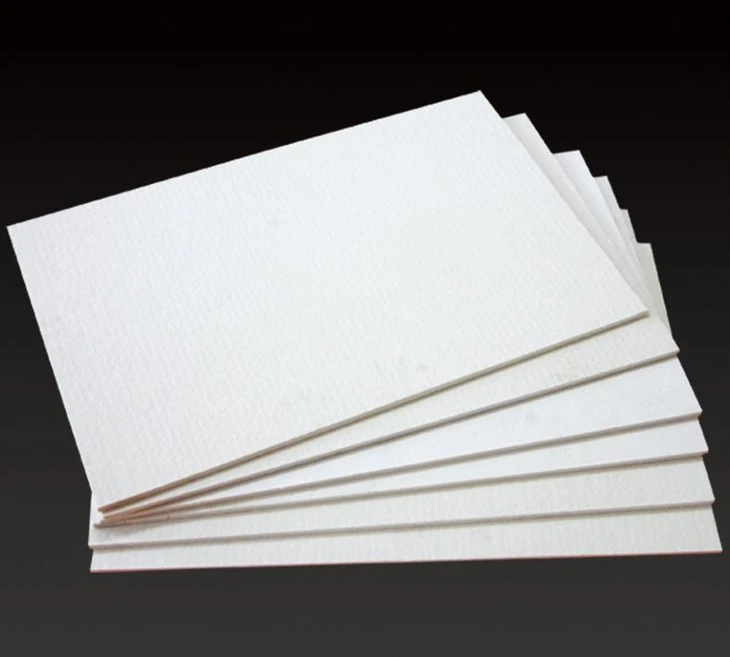
In addition to their high melting point, ceramic fiber boards also have good resistance to thermal shock. Thermal shock occurs when a material is subjected to rapid temperature changes, which can cause it to crack or break. Ceramic fiber boards are able to withstand these sudden temperature fluctuations without significant damage, thanks to their flexible and porous structure.
Another important factor to consider when evaluating the fire resistance of ceramic fiber boards is their chemical stability. Ceramic fibers are chemically inert, which means they do not react with most chemicals or gases at high temperatures. This makes them suitable for use in a wide range of industrial applications, including those where they may come into contact with corrosive substances.
However, it's important to note that while ceramic fiber boards are highly fire-resistant, they are not completely fireproof. In extreme conditions, such as exposure to an open flame or a very high-intensity heat source, the boards may eventually break down or catch fire. Therefore, it's always recommended to follow proper installation and safety guidelines when using ceramic fiber boards in fire-prone areas.
Now, let's talk about some of the applications where ceramic fiber boards are commonly used due to their fire resistance. One of the most common uses is in furnace linings. Furnaces are used in a variety of industries to heat materials to high temperatures, and ceramic fiber boards are an ideal choice for lining the walls and roofs of these furnaces. They provide excellent insulation, which helps to reduce heat loss and improve energy efficiency, while also protecting the furnace structure from the intense heat.
Another application is in kiln insulation. Kilns are used for firing ceramics, glass, and other materials, and ceramic fiber boards are often used to line the interior of the kiln to prevent heat from escaping and to maintain a consistent temperature inside. Our 1/4 Inch Ceramic Fiber Board is a popular choice for kiln insulation due to its thin profile and excellent thermal performance.
Ceramic fiber boards are also used in the aerospace and automotive industries for fire protection and thermal insulation. In aircraft engines and automotive exhaust systems, for example, ceramic fiber boards can help to reduce heat transfer and protect nearby components from damage.
In addition to these industrial applications, ceramic fiber boards are also used in some residential and commercial settings. For example, they can be used in fireplace inserts and wood stoves to improve heat efficiency and reduce the risk of fire.
If you're interested in learning more about the fire resistance of ceramic fiber boards or need help choosing the right product for your application, feel free to reach out to us. We're a leading supplier of ceramic fiber boards and have a team of experts who can provide you with the information and support you need.
We offer a wide range of ceramic fiber board products, including different sizes, thicknesses, and grades to meet your specific requirements. Whether you need a standard off-the-shelf product or a custom-made solution, we can help. And if you're looking for a shaped ceramic fiber product, check out our Ceramic Fiber Product Shaped.
So, if you're in the market for a fire-resistant insulation material, consider ceramic fiber boards. They offer excellent performance, durability, and cost-effectiveness, making them a great choice for a variety of applications. Don't hesitate to contact us to discuss your project and find out how our ceramic fiber boards can meet your needs.
References
- "Ceramic Fiber Insulation: Properties and Applications." Journal of Thermal Insulation and Energy Conservation.
- "High-Temperature Insulation Materials: A Review." International Journal of Materials Science and Engineering.


