


Magnetic susceptibility is a fundamental physical property that describes how a material responds to an applied magnetic field. In the context of shaped ceramic fiber products, understanding magnetic susceptibility can provide valuable insights into their behavior in various applications, especially those where magnetic fields are present. As a supplier of Ceramic Fiber Product Shaped, I've had the opportunity to explore this topic in depth and would like to share some of my knowledge with you.
What is Magnetic Susceptibility?
Magnetic susceptibility, denoted by the Greek letter χ (chi), is a dimensionless quantity that measures the degree of magnetization of a material in response to an applied magnetic field. It is defined as the ratio of the magnetization M (the magnetic moment per unit volume) to the applied magnetic field strength H:
χ = M / H
Materials can be classified into three main categories based on their magnetic susceptibility:
-
Diamagnetic materials: These materials have a negative magnetic susceptibility (χ < 0), meaning they are weakly repelled by a magnetic field. Diamagnetism is a universal property of all materials, but it is often masked by other magnetic effects in materials that exhibit paramagnetism or ferromagnetism. Examples of diamagnetic materials include copper, silver, and most organic compounds.
-
Paramagnetic materials: These materials have a positive magnetic susceptibility (χ > 0), meaning they are weakly attracted to a magnetic field. Paramagnetism arises from the presence of unpaired electrons in the atoms or molecules of the material. When an external magnetic field is applied, these unpaired electrons align their magnetic moments with the field, resulting in a net magnetization. Examples of paramagnetic materials include aluminum, oxygen, and many transition metal compounds.
-
Ferromagnetic materials: These materials have a large positive magnetic susceptibility (χ >> 0) and can retain a magnetization even after the external magnetic field is removed. Ferromagnetism is caused by the alignment of the magnetic moments of a large number of atoms or molecules in a material due to strong exchange interactions between neighboring atoms. Examples of ferromagnetic materials include iron, nickel, and cobalt.
Magnetic Susceptibility of Ceramic Fiber Products
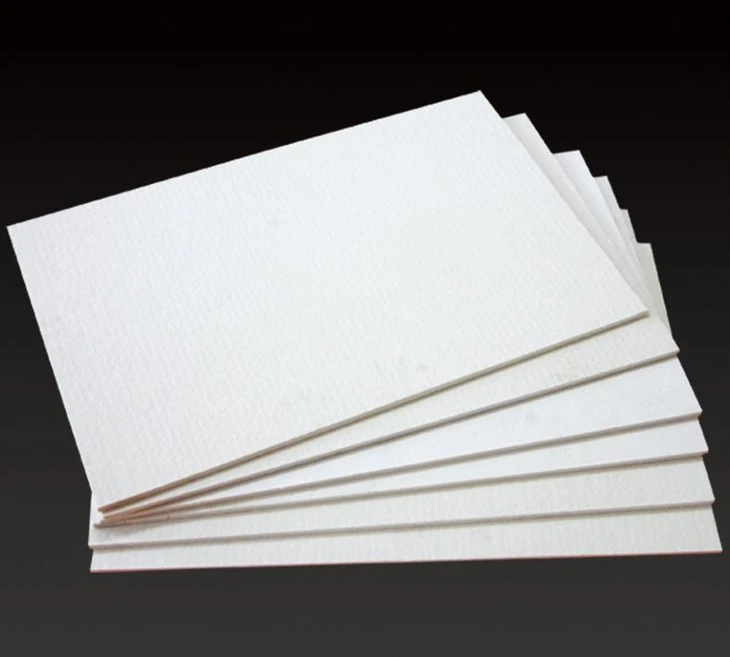
Ceramic fiber products are typically made from inorganic materials such as alumina, silica, and zirconia. These materials are generally diamagnetic or weakly paramagnetic, meaning they have a very low magnetic susceptibility. The magnetic susceptibility of ceramic fiber products can be influenced by several factors, including the chemical composition, crystal structure, and processing conditions of the material.

-
Chemical Composition: The magnetic susceptibility of ceramic fiber products can be affected by the presence of transition metal ions in the material. Transition metal ions have unpaired electrons in their d orbitals, which can contribute to paramagnetism. For example, ceramic fibers containing small amounts of iron or nickel may exhibit weak paramagnetic behavior.
-
Crystal Structure: The crystal structure of the ceramic material can also influence its magnetic susceptibility. Some crystal structures may have a higher degree of symmetry, which can reduce the magnetic interactions between the atoms or molecules in the material. For example, ceramic fibers with a cubic crystal structure may have a lower magnetic susceptibility than those with a more complex crystal structure.
-
Processing Conditions: The processing conditions used to manufacture ceramic fiber products can also affect their magnetic susceptibility. For example, heat treatment at high temperatures can cause changes in the crystal structure and chemical composition of the material, which can in turn affect its magnetic properties.
Applications of Ceramic Fiber Products with Low Magnetic Susceptibility
The low magnetic susceptibility of ceramic fiber products makes them suitable for a wide range of applications where magnetic interference is a concern. Some of these applications include:
-
Electronics and Telecommunications: Ceramic fiber products can be used as insulation materials in electronic devices and telecommunications equipment to reduce electromagnetic interference (EMI). For example, Ceramic Fibre Board 50mm can be used to line the walls of electronic enclosures to prevent the leakage of electromagnetic radiation.
-
Medical Equipment: Ceramic fiber products can be used in medical equipment such as MRI machines and X-ray generators to reduce magnetic interference and improve the quality of the imaging. 1/4 Inch Ceramic Fiber Board can be used as a thermal insulation material in these applications to prevent heat transfer and protect the sensitive electronic components.
-
Aerospace and Defense: Ceramic fiber products can be used in aerospace and defense applications to reduce the radar signature of aircraft and other vehicles. High Temperature Ceramic Fiber Board can be used as a thermal insulation material in the engines and other high-temperature components of these vehicles to improve their performance and efficiency.
Measuring the Magnetic Susceptibility of Ceramic Fiber Products
The magnetic susceptibility of ceramic fiber products can be measured using a variety of techniques, including:
-
SQUID Magnetometry: Superconducting quantum interference device (SQUID) magnetometry is a highly sensitive technique that can measure the magnetic moment of a sample with very high precision. This technique is often used to measure the magnetic susceptibility of small samples of ceramic fiber products.
-
Vibrating Sample Magnetometry (VSM): VSM is a commonly used technique for measuring the magnetic properties of materials. In this technique, the sample is vibrated in a magnetic field, and the induced voltage in a pick-up coil is measured. The magnetic susceptibility of the sample can be calculated from the measured voltage.
-
Gouy Balance: The Gouy balance is a simple and inexpensive technique for measuring the magnetic susceptibility of materials. In this technique, the sample is suspended from a balance and placed in a non-uniform magnetic field. The force exerted on the sample by the magnetic field is measured, and the magnetic susceptibility of the sample can be calculated from the measured force.
Conclusion
In conclusion, the magnetic susceptibility of shaped ceramic fiber products is generally very low, making them suitable for applications where magnetic interference is a concern. The magnetic susceptibility of these products can be influenced by several factors, including the chemical composition, crystal structure, and processing conditions of the material. By understanding the magnetic properties of ceramic fiber products, we can better select the appropriate materials for specific applications and optimize their performance.
If you are interested in learning more about our Ceramic Fiber Product Shaped or have any questions about their magnetic susceptibility, please feel free to contact us for a detailed discussion. We are committed to providing high-quality ceramic fiber products and excellent customer service.
References
- Cullity, B. D., & Graham, C. D. (2008). Introduction to Magnetic Materials. Wiley-IEEE Press.
- Kittel, C. (2005). Introduction to Solid State Physics. Wiley.
- O'Handley, R. C. (2000). Modern Magnetic Materials: Principles and Applications. Wiley.


