


As a supplier of Lining Ceramic Fiber Board, I'm often asked about its various properties, including its optical characteristics. In this blog post, I'll delve into the optical property of Lining Ceramic Fiber Board, exploring what it means and why it matters in different applications.
Understanding the Basics of Optical Properties
Before we specifically discuss the optical property of Lining Ceramic Fiber Board, it's essential to understand what optical properties are in general. Optical properties refer to how a material interacts with light. This interaction can include absorption, reflection, transmission, and scattering of light. These properties are crucial in many industries, from construction to electronics, as they can affect the appearance, performance, and functionality of products.
The Optical Property of Lining Ceramic Fiber Board
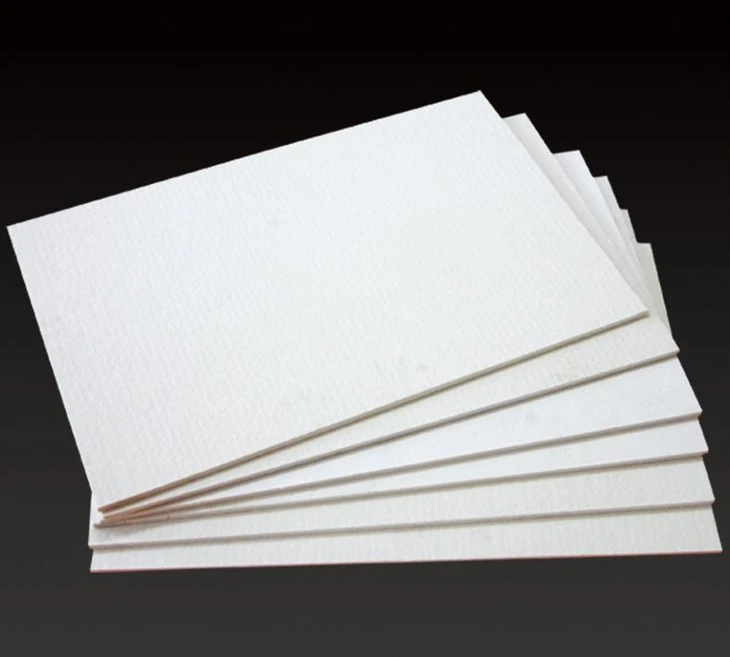
Lining Ceramic Fiber Board has unique optical properties that are closely related to its composition and structure. The board is primarily made of ceramic fibers, which are arranged in a random or semi - ordered manner. This structure plays a significant role in how the board interacts with light.
Absorption
One of the key optical properties of Lining Ceramic Fiber Board is its ability to absorb light. The ceramic fibers in the board have a certain level of absorption for different wavelengths of light. This absorption is due to the molecular structure of the ceramic materials. When light hits the board, some of the photons are absorbed by the ceramic molecules, converting the light energy into heat energy. This absorption property is beneficial in applications where heat management is important. For example, in high - temperature industrial furnaces, the Lining Ceramic Fiber Board can absorb the radiant heat from the furnace, helping to insulate the surrounding environment and reduce heat loss.
Reflection
The Lining Ceramic Fiber Board also exhibits reflection of light. The surface of the board, although not as smooth as a mirror, can reflect a portion of the incident light. The amount of reflection depends on several factors, such as the surface finish of the board and the angle of incidence of the light. A smoother surface will generally reflect more light than a rough one. This reflection property can be useful in applications where light needs to be redirected or where a certain level of visual appearance is desired. For instance, in some architectural applications, the reflection of light from the Lining Ceramic Fiber Board can contribute to the overall aesthetic of the space.
Transmission
Transmission of light through the Lining Ceramic Fiber Board is relatively low. Due to the dense arrangement of ceramic fibers, most of the light is either absorbed or reflected, and only a small fraction is transmitted. This low transmission property makes the board an effective light - blocking material. In applications where light isolation is required, such as in certain laboratory settings or in some industrial processes where light interference needs to be minimized, the Lining Ceramic Fiber Board can be a suitable choice.
Scattering
Scattering of light occurs when the light interacts with the irregularities in the structure of the Lining Ceramic Fiber Board. The random arrangement of ceramic fibers causes the light to change its direction multiple times as it passes through or reflects off the board. This scattering effect can make the board appear more diffuse in appearance. It also contributes to the overall optical behavior of the board, affecting both the absorption and reflection characteristics.
Applications Based on Optical Properties
The unique optical properties of Lining Ceramic Fiber Board make it suitable for a wide range of applications.
High - Temperature Insulation
As mentioned earlier, the absorption of light and conversion of light energy into heat energy are important for high - temperature insulation. In industrial furnaces, the High Temperature Ceramic Fiber Board can absorb the radiant heat from the furnace interior, reducing the heat transfer to the outside environment. This not only improves energy efficiency but also protects the surrounding equipment and personnel from high temperatures.
Architectural Applications
In architecture, the reflection and scattering properties of the Lining Ceramic Fiber Board can be used to create interesting visual effects. The board can be used as interior or exterior cladding, where its ability to reflect and scatter light can add depth and texture to the building facade. Additionally, its low light transmission can provide privacy in certain areas.
Laboratory and Industrial Processes
In laboratory settings and some industrial processes, the low light transmission and light - blocking properties of the 1/4 Inch Ceramic Fiber Board are highly valued. It can be used to create light - tight enclosures for sensitive experiments or processes where light interference needs to be eliminated.
Factors Affecting Optical Properties
Several factors can affect the optical properties of Lining Ceramic Fiber Board.
Fiber Composition
The type of ceramic fibers used in the board has a significant impact on its optical properties. Different ceramic materials have different absorption and reflection spectra. For example, some ceramic materials may absorb more infrared light, while others may have a higher reflection in the visible light range.

Fiber Density
The density of the ceramic fibers in the board also affects the optical properties. A higher fiber density generally leads to lower light transmission and higher absorption. This is because there are more fibers for the light to interact with, increasing the chances of absorption and scattering.
Surface Treatment
The surface treatment of the Lining Ceramic Fiber Board can modify its optical properties. A smooth surface finish can increase the reflection of light, while a rough surface may enhance the scattering effect. Surface coatings can also be applied to change the absorption and reflection characteristics of the board.
Importance of Optical Properties in Quality Control
Understanding the optical properties of Lining Ceramic Fiber Board is crucial for quality control. By measuring the absorption, reflection, and transmission of light, we can ensure that the board meets the required specifications. For example, in high - temperature insulation applications, a board with consistent absorption properties is essential for maintaining stable heat insulation performance. Any deviation in the optical properties may indicate a problem with the manufacturing process or the quality of the raw materials.
Conclusion
In conclusion, the optical property of Lining Ceramic Fiber Board is a complex and important characteristic that affects its performance in various applications. The absorption, reflection, transmission, and scattering of light are all influenced by the composition, structure, and surface treatment of the board. Whether it's for high - temperature insulation, architectural design, or laboratory use, the optical properties of the Lining Ceramic Fiber Board play a vital role in determining its suitability.
If you're interested in learning more about our Lining Ceramic Fiber Board or are considering a purchase for your specific application, we're here to help. Our team of experts can provide detailed information and guidance to ensure you get the right product for your needs. Contact us today to start a procurement discussion and explore how our Lining Ceramic Fiber Board can benefit your project.
References
- Ceramic Fiber Technology Handbook, 2nd Edition
- Journal of Materials Science and Engineering, Vol. 15, Issue 3
- Industrial Insulation Materials: Properties and Applications, 3rd Edition


