


Hey there! As a supplier of shaped ceramic fiber products, I often get asked about the thermal expansion coefficient of these nifty materials. So, let's dive right in and break it down in a way that's easy to understand.
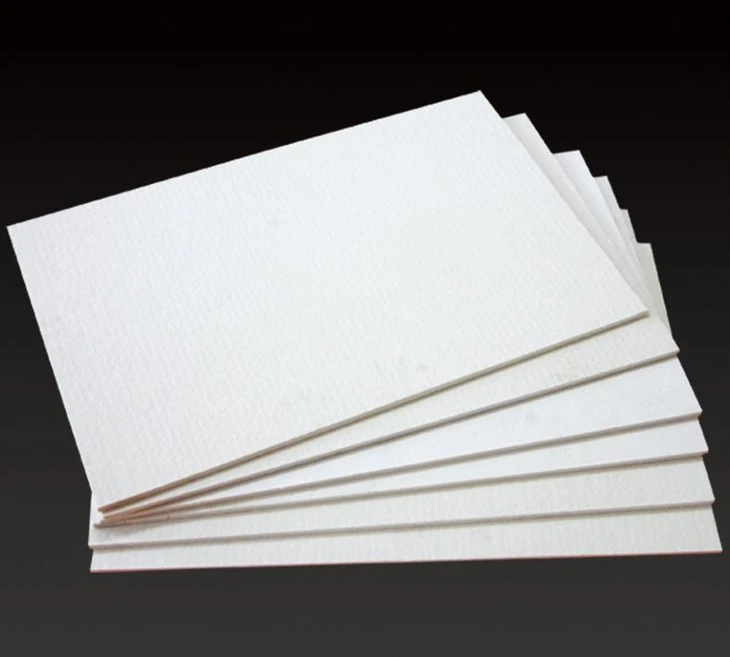
First off, what are shaped ceramic fiber products? Well, they're basically ceramic fibers that have been molded into specific shapes for various applications. These products are super popular in industries like metallurgy, petrochemicals, and power generation because they're great at insulating and can withstand really high temperatures. You might have heard of Lining Ceramic Fiber Board, 1/4 Inch Ceramic Fiber Board, or Refractory Ceramic Fiber Board. These are all examples of shaped ceramic fiber products.

Now, onto the thermal expansion coefficient. In simple terms, it's a measure of how much a material expands or contracts when its temperature changes. Every material has its own unique thermal expansion coefficient, and it's an important factor to consider when using shaped ceramic fiber products.
Why is it so important? Well, if a material expands too much when heated, it can cause problems like cracking, warping, or even failure of the product. On the other hand, if it contracts too much when cooled, it can lead to gaps or looseness, which can reduce its effectiveness as an insulator. So, understanding the thermal expansion coefficient of shaped ceramic fiber products is crucial for ensuring their proper performance and longevity.
The thermal expansion coefficient of shaped ceramic fiber products can vary depending on a few factors. One of the main factors is the composition of the ceramic fibers. Different types of ceramic fibers have different thermal properties, so the type of fiber used in the product can have a big impact on its thermal expansion coefficient.
Another factor is the manufacturing process. The way the ceramic fibers are formed and bonded together can also affect the thermal expansion coefficient. For example, products that are compressed more during manufacturing tend to have a lower thermal expansion coefficient because the fibers are more tightly packed together.
The temperature range is also an important factor. The thermal expansion coefficient of a material can change depending on the temperature it's exposed to. In general, most shaped ceramic fiber products have a relatively low thermal expansion coefficient at high temperatures, which is why they're so good at withstanding heat.
So, what's the typical thermal expansion coefficient of shaped ceramic fiber products? Well, it can vary depending on the specific product and its application, but generally speaking, it falls in the range of about 0.5 to 1.5 x 10^-6 per degree Celsius. This means that for every degree Celsius increase in temperature, the material will expand by about 0.5 to 1.5 parts per million.
Let's take a look at an example to see how important the thermal expansion coefficient is. Suppose you're using a shaped ceramic fiber product to line a high-temperature furnace. If the product has a high thermal expansion coefficient, it could expand too much when the furnace is heated, causing it to crack or break. This could not only damage the product but also reduce the efficiency of the furnace and increase energy consumption.
On the other hand, if the product has a low thermal expansion coefficient, it will expand less when heated, which means it will be more stable and less likely to crack or break. This can help to ensure the long-term performance of the furnace and reduce maintenance costs.
In addition to the thermal expansion coefficient, there are other important properties to consider when choosing shaped ceramic fiber products. For example, you'll want to look at the product's thermal conductivity, its chemical resistance, and its mechanical strength. These properties can all affect the product's performance and suitability for a particular application.
Thermal conductivity is a measure of how well a material conducts heat. A lower thermal conductivity means that the material is a better insulator, which is important for applications where you want to reduce heat loss. Chemical resistance is also important, especially if the product will be exposed to corrosive chemicals or gases. And mechanical strength is crucial for ensuring that the product can withstand the stresses and strains of its application.
As a supplier of shaped ceramic fiber products, I understand the importance of these properties and work hard to provide my customers with products that meet their specific needs. Whether you're looking for a high-temperature insulator for a furnace or a chemical-resistant lining for a pipeline, I can help you find the right product for your application.
If you're interested in learning more about shaped ceramic fiber products or have any questions about the thermal expansion coefficient or other properties, please don't hesitate to contact me. I'm always happy to help and can provide you with more information and samples if needed.
In conclusion, the thermal expansion coefficient is an important property to consider when using shaped ceramic fiber products. By understanding this property and choosing the right product for your application, you can ensure the proper performance and longevity of your equipment. So, if you're in the market for shaped ceramic fiber products, give me a shout and let's talk about how I can help you.
References
- Ceramic Fiber Handbook
- Industrial Insulation Manual


