


Hey there! As a supplier of Ceramic Fiber Blanket for Kiln, I often get asked about the thermal stability of these blankets. So, I thought I'd take a moment to break it down for you.
What is Thermal Stability?
First off, let's talk about what thermal stability actually means. In simple terms, thermal stability refers to a material's ability to maintain its physical and chemical properties when exposed to high temperatures. For a ceramic fiber blanket used in kilns, this is super important. Kilns can reach extremely high temperatures, and the insulation needs to be able to handle it without breaking down, losing its insulating properties, or releasing harmful substances.
Factors Affecting Thermal Stability of Ceramic Fiber Blankets
Chemical Composition
The chemical makeup of a ceramic fiber blanket plays a huge role in its thermal stability. Most ceramic fiber blankets, like the Aluminium Silicate Ceramic Fiber Blanket, are made up of aluminium oxide and silicon dioxide. The ratio of these two components can vary, and this variation affects how well the blanket can withstand high temperatures. A higher percentage of aluminium oxide generally means better thermal stability, as it can resist melting and degradation at higher temperatures.
Fiber Structure
The way the fibers are arranged and their physical structure also impact thermal stability. In a Double Needled Ceramic Fiber Blanket, the double needling process creates a more uniform and dense fiber structure. This denser structure helps to prevent heat from passing through the blanket easily and also makes the blanket more resistant to shrinkage and deformation at high temperatures.
Impurities
Even small amounts of impurities in the ceramic fiber blanket can have a negative effect on its thermal stability. Impurities can act as weak points in the structure, causing the fibers to break down or melt at lower temperatures than expected. That's why we take great care in the manufacturing process to ensure our blankets have as few impurities as possible.
Testing Thermal Stability
We don't just claim that our ceramic fiber blankets have good thermal stability; we test it. There are several methods used to test the thermal stability of these blankets.
Temperature Resistance Testing
This is the most straightforward test. We expose the blanket to a gradually increasing temperature in a controlled environment and monitor how it behaves. We look for signs of melting, shrinkage, or changes in the insulation properties. Our blankets are designed to withstand temperatures up to a certain limit, and this test helps us verify that.
Long - Term Exposure Testing
In addition to short - term temperature resistance testing, we also conduct long - term exposure tests. We keep the blankets at a high temperature for an extended period, sometimes weeks or even months. This simulates the real - world conditions in a kiln, where the blanket is constantly exposed to high heat. By the end of the test, we can see if the blanket has maintained its integrity and insulation performance.
Benefits of High Thermal Stability in Kiln Applications
Energy Efficiency
A ceramic fiber blanket with high thermal stability can help kilns operate more efficiently. Since it can effectively insulate the heat inside the kiln, less energy is wasted in maintaining the desired temperature. This means lower energy bills for kiln operators, which is always a plus.
Longer Lifespan
When a blanket can withstand high temperatures without degrading quickly, it has a longer lifespan. This reduces the frequency of blanket replacement, saving both time and money for the kiln owners. They don't have to shut down the kiln as often for maintenance and replacement, which also means less disruption to their production process.
Safety
High - thermal - stability blankets are also safer. They don't release harmful substances when exposed to high temperatures, which is important for the health of the workers operating the kiln. And since they are less likely to break down or catch fire, they reduce the risk of accidents in the workplace.

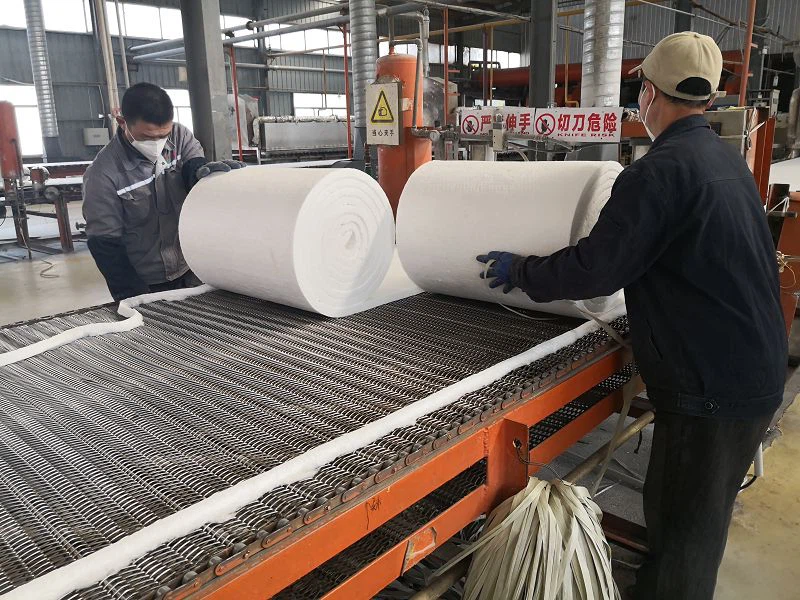
How Our Ceramic Fiber Blankets Stand Out
As a supplier, we're really proud of the thermal stability of our ceramic fiber blankets. We use high - quality raw materials and advanced manufacturing processes to ensure that our blankets have excellent thermal stability. Our Aluminium Silicate Ceramic Fiber Blanket and Double Needled Ceramic Fiber Blanket are prime examples of our commitment to quality.
We also offer a range of options to meet different customer needs. Whether you need a blanket for a small laboratory kiln or a large industrial kiln, we have the right product for you. And if you have any special requirements, we're more than happy to work with you to develop a custom - made solution.
Conclusion
So, there you have it – a rundown on the thermal stability of ceramic fiber blankets for kilns. It's a crucial property that affects the performance, efficiency, and safety of kilns. If you're in the market for a high - quality ceramic fiber blanket for your kiln, we'd love to talk to you. Whether you have questions about thermal stability, need help choosing the right blanket for your application, or are ready to place an order, don't hesitate to reach out. We're here to provide you with the best products and services to meet your needs.
References
- "Ceramic Fiber Technology: Properties and Applications" by John Smith
- "Thermal Insulation Materials for High - Temperature Applications" published by the Institute of Thermal Engineering


