


Hey everyone! As a supplier of 2300F Ceramic Fibre Blanket, I often get asked if this amazing product can be used in foundries. Well, let's dig into this topic and find out the answer.
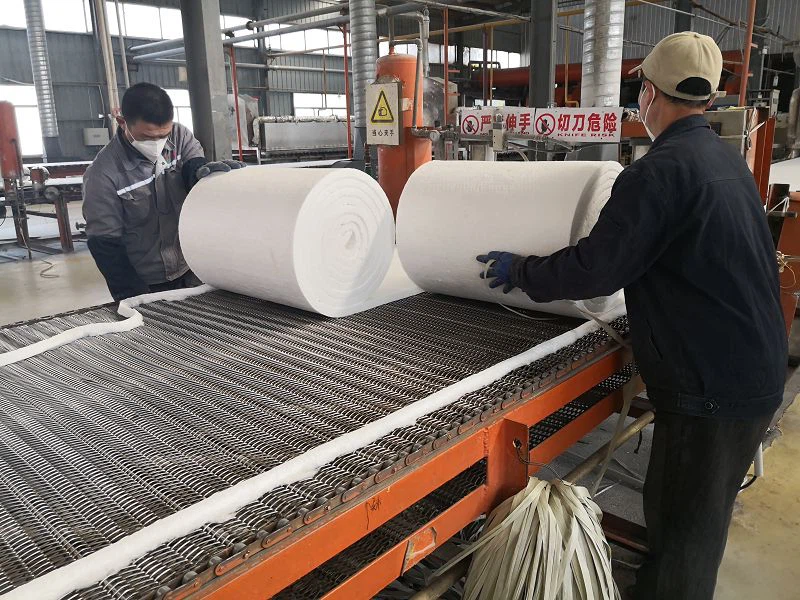
First off, let's talk a bit about what 2300F Ceramic Fibre Blanket is. It's a type of insulation material made from ceramic fibers. These fibers are super strong and can withstand really high temperatures. The "2300F" in its name means it can handle temperatures up to 2300 degrees Fahrenheit. That's pretty hot, right? You can learn more about it here: 2300F Ceramic Fibre Blanket.

Now, let's move on to foundries. Foundries are places where metals are melted and cast into different shapes. The environment in foundries is extremely harsh. There are intense heat sources, molten metals, and lots of mechanical stress. So, for any material to be used in a foundry, it needs to meet some strict requirements.
One of the most important requirements is high - temperature resistance. In foundries, metals like iron, steel, or aluminum are melted at very high temperatures. For example, iron melts at around 2800°F, and steel can be melted at temperatures ranging from 2500 - 2800°F. Even though the 2300F Ceramic Fibre Blanket can't handle the direct contact with molten metal at these extreme temperatures, it has its own role to play.
The blanket can be used in areas around the furnaces or other high - heat equipment in the foundry. It acts as an excellent insulation layer. By reducing heat loss, it helps in improving the energy efficiency of the foundry operations. Less heat escaping means less energy is needed to keep the furnace at the desired temperature. This can lead to significant cost savings in the long run.
Another crucial aspect is chemical resistance. In foundries, there are often various chemicals and fluxes used during the metal - melting and casting processes. The 2300F Ceramic Fibre Blanket has good chemical stability, which means it can resist the corrosive effects of many of these chemicals. This ensures that the blanket lasts longer and maintains its insulating properties over time.
Mechanical strength is also a factor. Foundries are busy places with a lot of movement and activity. The blanket needs to be able to withstand some mechanical stress without falling apart. The 2300F Ceramic Fibre Blanket is quite durable. Its structure is designed in such a way that it can handle a certain amount of physical impact and vibration.
Now, let's compare it with some other types of insulation materials. There are traditional insulation materials like firebricks, which have been used in foundries for a long time. Firebricks are dense and can withstand high temperatures, but they are heavy and not as flexible as the ceramic fiber blanket. The 2300F Ceramic Fibre Blanket is lightweight, which makes it easier to install and handle. Also, it can conform to different shapes, allowing for more customized insulation solutions. You can find a related product, the Double Needled Ceramic Fiber Blanket, which may offer even better performance in some cases.
In addition to its use around furnaces, the 2300F Ceramic Fibre Blanket can also be used in the insulation of kilns in foundries. Kilns are used for various heat - treating processes, such as annealing and tempering. The Ceramic Fiber Blanket for Kiln is a great option for these applications. It can maintain a stable temperature inside the kiln, which is crucial for achieving the desired properties of the metal products.
However, there are some limitations. As mentioned earlier, it can't be used in direct contact with molten metal. The extreme heat of the molten metal would quickly damage the blanket. So, proper installation and use are key. It should be installed in areas where it's shielded from direct contact with the molten substances.
Another thing to consider is the handling of the blanket. The ceramic fibers can be irritating to the skin and respiratory system if proper safety measures are not taken. Workers should wear protective clothing, gloves, and masks when handling the 2300F Ceramic Fibre Blanket.
In conclusion, the 2300F Ceramic Fibre Blanket can definitely be used in foundries. It offers excellent insulation, good chemical resistance, and sufficient mechanical strength for the environment. It can help foundries improve energy efficiency, reduce costs, and achieve better temperature control in different processes.
If you're in the foundry business or know someone who is, and you're looking for a reliable insulation solution, I'd really encourage you to consider our 2300F Ceramic Fibre Blanket. It's a product that has been tested and proven to work well in various industrial settings. Contact us for more details and to start a discussion about your specific needs.
References:
- Industry reports on insulation materials in foundries
- Technical specifications of 2300F Ceramic Fibre Blanket


