


Hey there! As a supplier of ceramic fiber boards, I often get asked about how these nifty products resist chemical corrosion in the chemical industry. So, let's dive right in and explore this topic together.
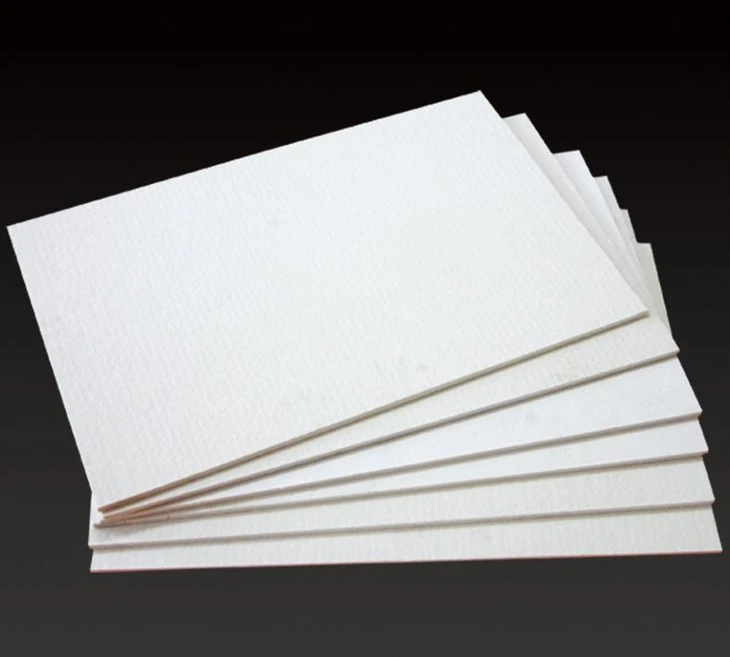
First off, what exactly is a ceramic fiber board? Well, it's a type of insulation material made from ceramic fibers. These boards are known for their high - temperature resistance, low thermal conductivity, and excellent insulation properties. They come in various shapes and sizes, like the Lining Ceramic Fiber Board, Ceramic Fiber Product Shaped, and 1/4 Inch Ceramic Fiber Board.
Now, let's talk about chemical corrosion. In the chemical industry, there are all sorts of aggressive chemicals floating around. These can include acids, alkalis, and various solvents. When these chemicals come into contact with materials, they can cause corrosion, which can lead to the degradation of the material, reduced performance, and even safety hazards.
So, how does ceramic fiber board hold up against these chemicals?
Chemical Composition
The chemical composition of ceramic fiber boards plays a huge role in their corrosion resistance. Most ceramic fiber boards are mainly composed of alumina (Al₂O₃) and silica (SiO₂). These two components form a stable structure that is relatively inert to many chemicals.
Alumina is known for its high chemical stability. It can withstand the attack of many acids and alkalis to a certain extent. Silica, on the other hand, also has good chemical resistance. When these two are combined in the right proportions, they create a material that can resist the corrosive effects of many common chemicals in the chemical industry.
For example, in an environment where there are low - concentration acids, the alumina and silica in the ceramic fiber board form a protective layer on the surface. This layer acts as a barrier, preventing the acid from penetrating deeper into the material and causing damage.
Physical Structure
The physical structure of ceramic fiber boards also contributes to their corrosion resistance. These boards have a porous structure. At first glance, you might think that pores would make the material more vulnerable to chemical attack. But in fact, the pores can actually help.
The porous structure allows for some degree of absorption and diffusion of the chemicals. When a chemical comes into contact with the board, it can be absorbed into the pores. This slows down the rate of chemical reaction because the chemical is spread out over a larger surface area.
Moreover, the fibers in the board are intertwined, creating a complex network. This network further hinders the movement of chemicals through the material. So, even if a chemical manages to penetrate the surface, it has a hard time reaching the inner parts of the board quickly.
Surface Treatment
Sometimes, we apply surface treatments to the ceramic fiber boards to enhance their corrosion resistance. One common treatment is the application of a protective coating. This coating can be made of a material that is highly resistant to the specific chemicals in the environment.
For instance, if the board is going to be used in an environment with high - concentration alkalis, we might apply a coating that is rich in materials like zirconia. Zirconia has excellent resistance to alkalis. The coating forms an extra layer of protection on top of the natural corrosion - resistant properties of the board.
Another type of surface treatment is the use of hydrophobic agents. These agents make the surface of the board repel water. Since many chemical reactions in the corrosion process involve water, by keeping water away from the board, we can reduce the likelihood of corrosion.
Applications in the Chemical Industry
Ceramic fiber boards are widely used in the chemical industry because of their corrosion - resistant properties. They can be used as linings in chemical reactors. In a reactor, there are often high - temperature and high - pressure conditions, along with aggressive chemicals. The ceramic fiber board lining helps to protect the reactor walls from corrosion and also provides insulation, reducing heat loss.
They are also used in pipes that carry chemicals. The boards can be wrapped around the pipes to prevent the pipes from being corroded by the chemicals flowing inside. This not only extends the lifespan of the pipes but also ensures the safe transportation of chemicals.
Limitations
Of course, ceramic fiber boards aren't invincible. There are some situations where they might not perform as well. For example, in extremely high - concentration and high - temperature chemical environments, the corrosion resistance of the boards can be challenged.
Some very strong oxidizing agents can react with the alumina and silica in the board over time. Also, if the board is exposed to a chemical for a very long period, the protective mechanisms might eventually break down.
But overall, in most common chemical industry scenarios, ceramic fiber boards are a reliable choice for resisting chemical corrosion.

Why Choose Our Ceramic Fiber Boards
As a supplier, I can tell you that our ceramic fiber boards are top - notch. We use high - quality raw materials to ensure the best chemical composition. Our manufacturing process is carefully controlled to create the optimal physical structure. And we offer customized surface treatments based on your specific needs.
If you're in the chemical industry and are looking for a material that can resist chemical corrosion, our ceramic fiber boards are definitely worth considering. Whether you need a Lining Ceramic Fiber Board for your reactor or a 1/4 Inch Ceramic Fiber Board for your pipes, we've got you covered.
If you're interested in learning more about our products or want to discuss a potential purchase, don't hesitate to reach out. We're always happy to have a chat and help you find the right solution for your needs.
References
- "Handbook of Advanced Ceramics: Materials, Applications, Processing and Properties" by C. A. Bernardo, I. M. Reaney, and J. L. Chermant
- "Corrosion Science and Engineering" by David A. Jones
- Research papers on ceramic materials and their applications in the chemical industry from various academic journals.


