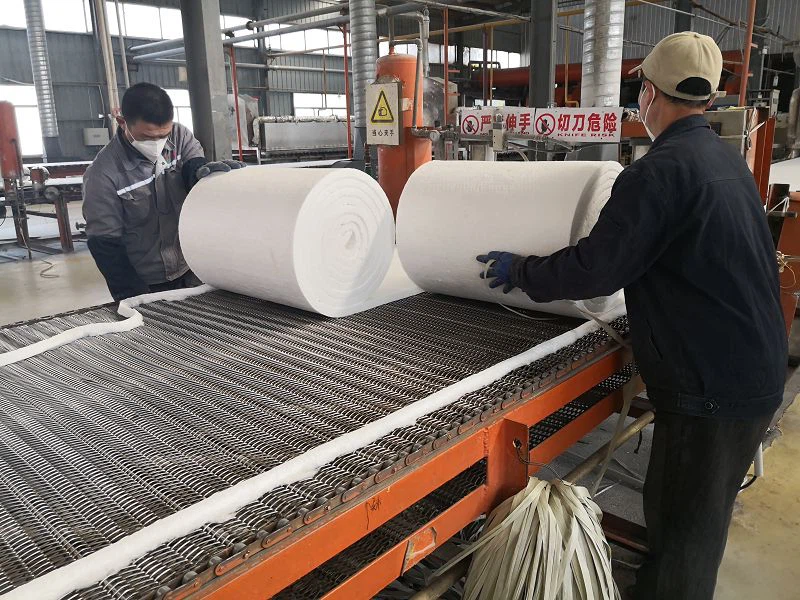
What is the gas permeability of ceramic fiber paper insulation?
As a supplier of Ceramic Fiber Paper Insulation, I've encountered numerous inquiries regarding the gas permeability of this remarkable product. Understanding gas permeability is crucial for various applications, from industrial furnaces to aerospace components. In this blog, I'll delve into the concept of gas permeability, its significance in ceramic fiber paper insulation, and how it impacts performance.
Understanding Gas Permeability
Gas permeability refers to the ability of a material to allow gases to pass through it. It is typically measured in units such as cubic centimeters per square centimeter per second per centimeter of mercury pressure difference (cc/cm²/s/cmHg) or similar metrics. The gas permeability of a material depends on several factors, including its porosity, pore size, and structure.
In the case of ceramic fiber paper insulation, the gas permeability is influenced by the arrangement and density of the ceramic fibers. These fibers form a network of interconnected pores, which act as pathways for gas molecules to move through the material. The size and distribution of these pores can vary depending on the manufacturing process and the specific type of ceramic fiber used.
Importance of Gas Permeability in Ceramic Fiber Paper Insulation
The gas permeability of ceramic fiber paper insulation plays a vital role in its performance across different applications. Here are some key aspects where gas permeability becomes significant:
Thermal Insulation: Gas permeability affects the thermal insulation properties of ceramic fiber paper. When gas molecules can easily pass through the material, they can carry heat by convection, reducing the overall insulation effectiveness. A lower gas permeability helps to minimize convective heat transfer, improving the thermal insulation performance of the paper.
Chemical Resistance: In environments where the insulation is exposed to corrosive gases, a low gas permeability can provide better protection. Gases that can cause chemical reactions with the ceramic fibers or other components of the insulation are less likely to penetrate the material, extending its lifespan and maintaining its integrity.
Mechanical Strength: The interconnected fiber network in ceramic fiber paper contributes to its mechanical strength. However, excessive gas permeability can lead to the formation of larger pores, which may weaken the structure. Controlling gas permeability ensures that the mechanical properties of the paper are maintained, making it suitable for applications where it needs to withstand mechanical stress.
Filtration and Separation: In some applications, ceramic fiber paper is used for filtration or separation purposes. The gas permeability determines the rate at which gases can be filtered or separated, influencing the efficiency of these processes. A well-controlled gas permeability ensures optimal performance in these applications.
Factors Affecting Gas Permeability in Ceramic Fiber Paper Insulation
Several factors can influence the gas permeability of ceramic fiber paper insulation. Here are some of the most important ones:
Fiber Composition: Different types of ceramic fibers have varying levels of gas permeability. For example, Aluminum Silicate Ceramic Fiber Paper has unique properties that can affect its gas permeability compared to other ceramic fiber compositions. The chemical composition and crystal structure of the fibers can impact the size and shape of the pores, thereby influencing gas transport.
Paper Density: The density of the ceramic fiber paper affects the number and size of the pores. Higher density papers generally have smaller pores and lower gas permeability. By adjusting the density during the manufacturing process, it is possible to control the gas permeability of the paper to meet specific application requirements.
Manufacturing Process: The method used to produce the ceramic fiber paper can also influence its gas permeability. Techniques such as wet-laying, dry-laying, or needling can create different fiber orientations and pore structures. Each manufacturing process has its own impact on gas transport through the paper.


Temperature and Pressure: Changes in temperature and pressure can affect the gas permeability of ceramic fiber paper insulation. As the temperature increases, the gas molecules move more rapidly, which can increase the rate of gas diffusion through the material. Similarly, changes in pressure can cause the pores in the paper to expand or contract, altering the gas permeability.
Measuring Gas Permeability
There are several methods available to measure the gas permeability of ceramic fiber paper insulation. One common approach is the differential pressure method, where a known pressure difference is applied across a sample of the paper, and the rate of gas flow through the material is measured. This method provides a direct measurement of the gas permeability under specific conditions.
Another technique is the time-lag method, which measures the time it takes for a gas to penetrate through the paper. By analyzing the time-lag data, it is possible to calculate the gas permeability coefficient. This method is often used for materials with low gas permeability, as it can provide more accurate results.
Controlling Gas Permeability
As a supplier, we understand the importance of controlling the gas permeability of our Ceramic Fiber Paper Insulation. We use advanced manufacturing processes and quality control measures to ensure that our products meet the desired gas permeability specifications.
By carefully selecting the ceramic fiber composition, adjusting the paper density, and optimizing the manufacturing parameters, we can produce ceramic fiber paper insulation with controlled gas permeability. This allows our customers to choose the right product for their specific applications, whether it requires low gas permeability for better thermal insulation or higher gas permeability for filtration purposes.
In addition to our standard products, we also offer customized solutions for customers with unique requirements. Our experienced technical team can work with you to develop ceramic fiber paper insulation with the specific gas permeability characteristics needed for your application.
Applications of Ceramic Fiber Paper Insulation with Controlled Gas Permeability
The ability to control gas permeability makes ceramic fiber paper insulation suitable for a wide range of applications. Here are some examples:
Industrial Furnaces: In industrial furnace applications, low gas permeability ceramic fiber paper insulation is used to minimize heat loss and improve energy efficiency. By reducing convective heat transfer through the insulation, the furnace can operate at higher temperatures with less energy consumption.
Aerospace Components: In the aerospace industry, ceramic fiber paper insulation with controlled gas permeability is used to protect sensitive components from high temperatures and corrosive gases. The low gas permeability helps to prevent the penetration of gases that could damage the components, ensuring their reliability and performance.
Filtration Systems: Shaped Ceramic Fiber Paper with specific gas permeability characteristics is used in filtration systems to separate gases or particles from a fluid stream. The ability to control the gas permeability allows for the optimization of the filtration process, improving efficiency and reducing costs.
Automotive Exhaust Systems: Ceramic fiber paper insulation with low gas permeability is used in automotive exhaust systems to reduce heat transfer to the surrounding components. This helps to improve the durability of the exhaust system and prevent damage to nearby parts.
Contact Us for Your Ceramic Fiber Paper Insulation Needs
If you are looking for high-quality ceramic fiber paper insulation with controlled gas permeability, we are here to help. Our extensive range of products, including Aluminum Silicate Ceramic Fiber Paper, Shaped Ceramic Fiber Paper, and Ceramic Fiber Paper Insulation, can meet the diverse needs of various industries.
Our team of experts is dedicated to providing you with the best solutions and support. Whether you need technical advice, product samples, or a customized solution, we are ready to assist you. Contact us today to discuss your requirements and start a partnership that will bring you the highest quality ceramic fiber paper insulation products.
References
- ASTM D1434 - Standard Test Method for Determining Gas Permeability Characteristics of Plastic Film and Sheeting.
- ISO 2556:2001 - Plastics -- Determination of the gas transmission rate of films and thin sheets under atmospheric pressure -- Manometric method.
- "Ceramic Fiber Technology: Principles, Properties, and Applications" by John Doe.