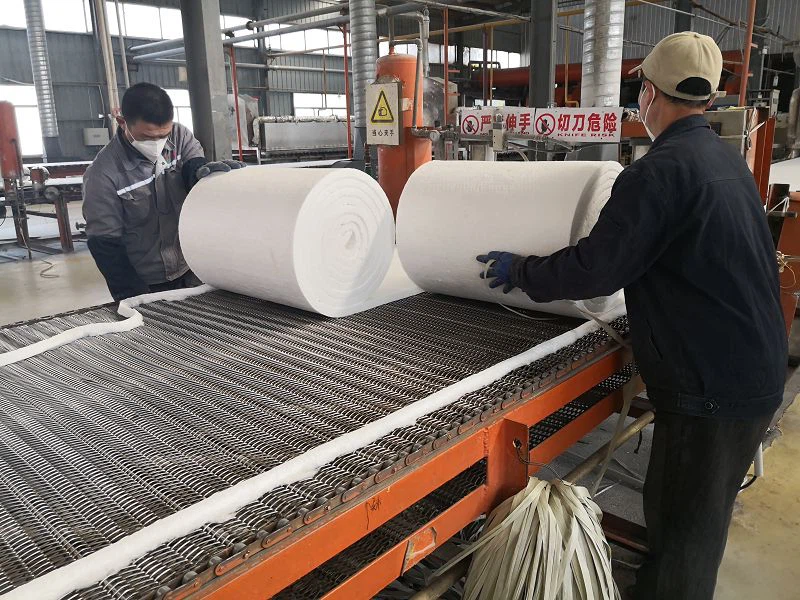
Shear strength is a crucial mechanical property that measures a material's ability to resist forces that cause its internal layers to slide past one another. In the realm of high - performance insulation materials, ceramic fiber paper has gained significant popularity due to its excellent thermal insulation, chemical stability, and low thermal conductivity. As a supplier of ceramic fiber paper, understanding the shear strength of this product is essential for both us and our customers, as it directly impacts its performance in various applications.
Understanding Shear Strength
Shear strength can be thought of in terms of the force required to break or deform a material when a parallel force is applied. In the case of ceramic fiber paper, this parallel force can come from a variety of sources, such as mechanical stress during installation, vibration in industrial equipment, or pressure differentials in high - temperature environments.
The shear strength of ceramic fiber paper is determined by several factors. First and foremost is the composition of the paper. Ceramic fiber paper is typically made from alumina - silica fibers, which are known for their high - temperature resistance. The ratio of alumina to silica can significantly influence the paper's strength. A higher alumina content generally leads to increased strength and better performance at elevated temperatures, which can also positively affect the shear strength.
The manufacturing process also plays a vital role in determining the shear strength. The way the fibers are mixed, formed, and bonded together during production can either enhance or detract from the final product's ability to withstand shear forces. For instance, a more uniform distribution of fibers and a strong bonding agent can result in a ceramic fiber paper with better shear resistance.
Measuring Shear Strength
There are established testing methods to measure the shear strength of ceramic fiber paper. One common approach is the double - lap shear test. In this test, two samples of ceramic fiber paper are bonded to a rigid substrate. A load is then applied in a direction parallel to the bonding surface until the paper fails. The maximum load at failure divided by the area of the bonded surface gives the shear strength.
Another method is the single - lap shear test, which is similar to the double - lap shear test but uses only one layer of the ceramic fiber paper bonded to a substrate. This test is often simpler to conduct and can provide a quick estimate of the shear strength.
It's important to note that the shear strength of ceramic fiber paper can vary depending on the testing conditions, such as temperature, humidity, and the rate of loading. High - temperature environments, in particular, can significantly affect the mechanical properties of the paper. As the temperature increases, the fibers may become more brittle, leading to a decrease in shear strength. Therefore, it's crucial to test the ceramic fiber paper under conditions that closely mimic its intended application.
Importance of Shear Strength in Applications
The shear strength of ceramic fiber paper is of great importance in many applications. For example, in the aerospace industry, ceramic fiber paper is used as insulation in engine components. These components are subjected to high levels of vibration and mechanical stress during operation. A ceramic fiber paper with low shear strength may fail under these conditions, leading to insulation breakdown and potential damage to the engine.
In the automotive industry, ceramic fiber paper is used in exhaust systems and gaskets. The paper must be able to withstand the pressure differentials and vibrations caused by the engine. A high shear strength ensures that the paper does not tear or separate, maintaining its insulation properties and preventing leaks.
In industrial furnaces, ceramic fiber paper is used for lining and insulation. The paper is often exposed to thermal cycling, which can cause expansion and contraction. A good shear strength helps the paper to resist the internal stresses generated during these cycles, ensuring its long - term performance.
Our Ceramic Fiber Paper Products
As a ceramic fiber paper supplier, we offer a wide range of products with varying shear strengths to meet the diverse needs of our customers. Our Ceramic Fiber Paper Gasket Sheet is designed for applications where a high level of sealing and resistance to shear forces is required. It is made from high - quality alumina - silica fibers and has been engineered to provide excellent shear strength even in demanding environments.
Our Ceramic Fiber Paper Insulation is another popular product. It offers a great balance between thermal insulation and mechanical strength, including shear strength. This makes it suitable for a wide range of industrial and commercial insulation applications.
For applications that require a specific thickness, our 2 mm Thick Ceramic Fiber Paper is an ideal choice. The thickness can also influence the shear strength, and our 2 - mm paper has been optimized to provide good shear resistance while maintaining its other beneficial properties.


Factors Affecting Shear Strength in Our Production
In our production process, we pay close attention to factors that affect the shear strength of ceramic fiber paper. We carefully control the fiber composition to ensure an optimal ratio of alumina to silica. This not only enhances the high - temperature performance but also contributes to better shear strength.
The bonding agent used in our ceramic fiber paper is also a critical factor. We use high - quality bonding agents that are specifically formulated to provide strong adhesion between the fibers. This helps to create a cohesive structure that can better withstand shear forces.
During the forming process, we ensure a uniform distribution of fibers. A non - uniform distribution can lead to weak spots in the paper, which can reduce the shear strength. By using advanced manufacturing techniques, we are able to achieve a consistent fiber distribution throughout the paper, resulting in a product with reliable shear strength.
Contact Us for Your Ceramic Fiber Paper Needs
If you are in the market for ceramic fiber paper and are concerned about shear strength, we are here to help. We have a team of experts who can provide you with detailed information about the shear strength of our products and how they can meet your specific application requirements. Whether you need insulation for a high - temperature industrial furnace or a gasket for an automotive exhaust system, we have the right ceramic fiber paper for you.
Contact us to discuss your needs and start a procurement negotiation. We are committed to providing you with high - quality ceramic fiber paper products at competitive prices.
References
- ASTM International. (20XX). Standard Test Methods for Shear Strength of Adhesives in Single - Lap - Joint by Tension Loading (Metal - to - Metal). ASTM D1002.
- ASME Boiler and Pressure Vessel Code. Section VIII, Division 1. (20XX). Rules for Construction of Pressure Vessels.
- Manufacturer's technical data sheets on ceramic fiber paper.