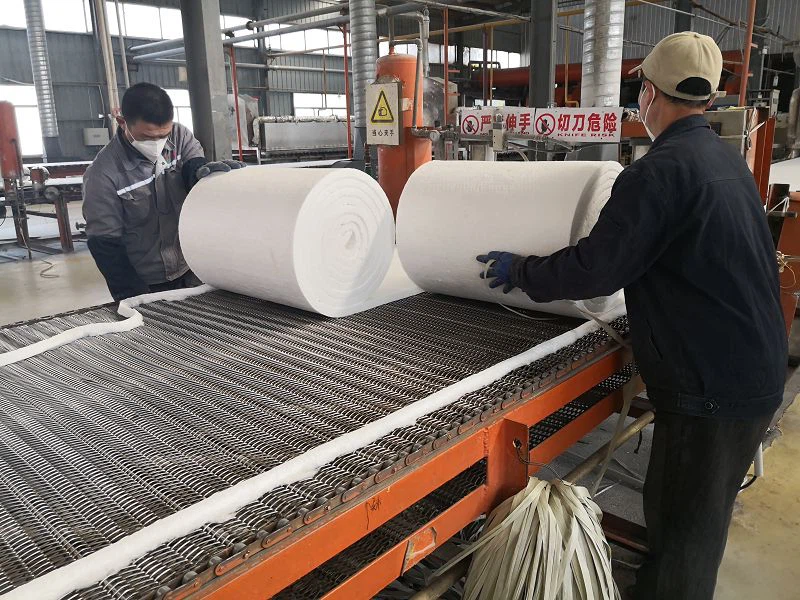
Hey there! As a supplier of thermal insulation blankets, I often get asked about the temperature range these blankets can handle. It's a super important question, especially for industries that rely on these blankets to keep things at the right temperature. So, let's dive into it and explore what the temperature range of a thermal insulation blanket really is.
Understanding Thermal Insulation Blankets
First off, thermal insulation blankets are designed to reduce the transfer of heat. They're used in a wide range of applications, from industrial furnaces to automotive engines. These blankets are made from different materials, each with its own unique properties and temperature limits.
One of the most common materials used in thermal insulation blankets is ceramic fiber. Ceramic fiber blankets are known for their excellent heat resistance and insulation properties. They can withstand high temperatures and are often used in industrial settings where extreme heat is present.
Temperature Range of Ceramic Fiber Blankets
Ceramic fiber blankets can handle a pretty wide temperature range. Generally, they can withstand temperatures from around 1000°F (538°C) up to 2300°F (1260°C). However, the exact temperature range can vary depending on the specific type of ceramic fiber blanket.
For example, the Aluminium Silicate Ceramic Fiber Blanket is designed to handle high temperatures. It can withstand continuous use at temperatures up to 2100°F (1149°C) and short-term use at even higher temperatures. This makes it a great choice for applications where high heat is a constant factor.
Another type of ceramic fiber blanket is the Ceramic Fiber Blanket for Industry Furnace. This blanket is specifically designed for use in industrial furnaces, where temperatures can reach extremely high levels. It can handle continuous use at temperatures up to 2300°F (1260°C), making it ideal for these demanding applications.
Factors Affecting the Temperature Range
There are several factors that can affect the temperature range of a thermal insulation blanket. One of the most important factors is the material used to make the blanket. Different materials have different heat resistance properties, which can impact the maximum temperature the blanket can handle.
Another factor is the thickness of the blanket. Thicker blankets generally have better insulation properties and can withstand higher temperatures. For example, a 2 Inch Ceramic Fiber Blanket will typically have a higher temperature range than a thinner blanket.


The density of the blanket also plays a role. Higher density blankets tend to have better insulation properties and can handle higher temperatures. However, they may also be more expensive and heavier.
Applications and Temperature Requirements
The temperature range of a thermal insulation blanket is closely related to its application. Different industries have different temperature requirements, and it's important to choose a blanket that can meet those requirements.
In the industrial sector, thermal insulation blankets are used in a variety of applications, including furnaces, kilns, and boilers. These applications often require blankets that can withstand high temperatures for extended periods of time. For example, in a steel manufacturing plant, the temperature inside a furnace can reach up to 2000°F (1093°C). In this case, a high-temperature ceramic fiber blanket would be the best choice.
In the automotive industry, thermal insulation blankets are used to protect engine components from heat. These blankets need to be able to withstand the high temperatures generated by the engine, which can range from 400°F (204°C) to 1200°F (649°C). A blanket with a lower temperature range may be sufficient for this application.
Choosing the Right Thermal Insulation Blanket
When choosing a thermal insulation blanket, it's important to consider the temperature range, as well as other factors such as the material, thickness, and density. You also need to think about the specific application and the environment in which the blanket will be used.
If you're not sure which blanket is right for your needs, don't hesitate to reach out to us. We're here to help you find the best solution for your application. Whether you need a high-temperature blanket for an industrial furnace or a lower-temperature blanket for an automotive engine, we have the expertise and products to meet your needs.
Conclusion
In conclusion, the temperature range of a thermal insulation blanket depends on several factors, including the material, thickness, and density. Ceramic fiber blankets are a popular choice for high-temperature applications, with a temperature range that can reach up to 2300°F (1260°C). When choosing a blanket, it's important to consider the specific application and the temperature requirements.
If you're in the market for a thermal insulation blanket, we'd love to hear from you. We can provide you with more information about our products and help you choose the right blanket for your needs. Contact us today to start the conversation!
References
- Ceramic Fiber Insulation Handbook
- Industry Standards for Thermal Insulation