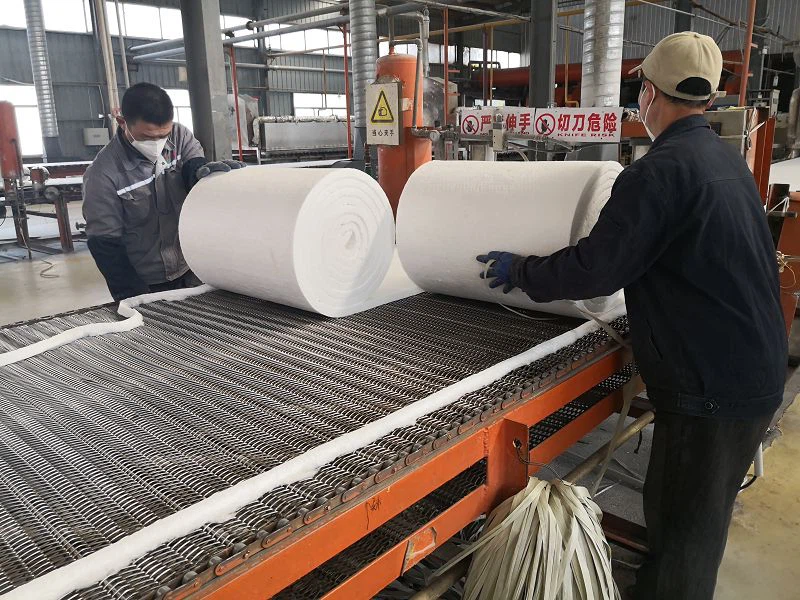
Hey there! As a supplier of Ceramic Fiber Product Shaped, I'm super excited to dive into the different shapes of these awesome products. Let's check them out!


1. Sheets and Boards
Ceramic fiber sheets and boards are some of the most common shapes out there. These are flat, rectangular pieces that come in various thicknesses. They're super versatile and can be used in a bunch of different applications.
Lining Ceramic Fiber Board
The Lining Ceramic Fiber Board is one great example. It's often used for lining furnaces, kilns, and other high - temperature equipment. They can be easily cut and installed to fit the specific dimensions of the lining area. This shape is perfect because it provides a smooth and even surface, which helps in maintaining a consistent temperature inside the equipment.
High Temperature Ceramic Fiber Board
Then we have the High Temperature Ceramic Fiber Board. These boards are designed to withstand extremely high temperatures. They're used in industrial settings where heat resistance is crucial, like in the aerospace and metal - processing industries. The flat shape makes them easy to stack, transport, and install.
2. Cylinders and Tubes
Ceramic fiber cylinders and tubes are another important shape. They're basically round, hollow structures.
These are often used for insulating pipes and tubes that carry hot fluids or gases. The cylindrical shape allows for a perfect fit around the pipes, providing excellent thermal insulation. This helps in reducing heat loss and improving energy efficiency. For example, in a chemical plant, where pipes are used to transport hot chemicals, ceramic fiber tubes can keep the chemicals at the right temperature and prevent heat from escaping into the environment.
3. Cones and Pyramids
Ceramic fiber cones and pyramids are less common but are still very useful in specific applications.
Cones are often used in applications where a gradual change in temperature or a focused heat source is required. For instance, in some types of heating equipment, a cone - shaped ceramic fiber piece can help direct the heat towards a specific area.
Pyramids, on the other hand, can be used in experimental setups or in some specialized industrial processes where a unique heat distribution pattern is needed. Their shape allows for a more complex heat flow compared to flat or cylindrical shapes.
4. Custom - Shaped Products
One of the great things about ceramic fiber products is that they can be custom - shaped to meet specific customer needs.
Maybe a customer has a piece of equipment with a very odd - shaped cavity that needs insulation. We can create a ceramic fiber product that perfectly fits that cavity. This could involve creating a shape that's a combination of curves, angles, and irregular forms. With the right manufacturing techniques and expertise, we can produce a custom - shaped ceramic fiber product that provides the best possible insulation for the particular application.
5. Molds and Castings
Ceramic fiber molds and castings are also available. These are used in the process of casting metals or other materials.
The mold shape can be customized to create specific parts. When a hot metal is poured into the ceramic fiber mold, the fiber's high - temperature resistance keeps the shape intact while the metal cools and solidifies. This is crucial in industries like automotive and aerospace manufacturing, where precise parts are required.
Why Shape Matters
The shape of a ceramic fiber product is not just about aesthetics; it's all about function.
Each shape is designed to perform a specific role in different applications. For example, a flat board is ideal for covering large, flat surfaces, while a cylinder is perfect for wrapping around pipes. The right shape ensures that the ceramic fiber product can provide the best possible thermal insulation, protecting equipment, saving energy, and improving overall efficiency.
How We Create These Shapes
As a supplier, we use a variety of manufacturing processes to create these different shapes.
For sheets and boards, we usually start with a mixture of ceramic fiber materials, binders, and other additives. This mixture is then formed into a flat layer using processes like pressing or casting. After that, it goes through a drying and curing process to harden the shape.
For cylinders and tubes, we might use a winding process. The ceramic fiber material is wound around a central core in a precise manner to create the round shape.
Custom - shaped products often require more complex techniques. We use computer - aided design (CAD) to create a detailed design of the shape. Then, we use precision manufacturing equipment like CNC machining to cut and shape the ceramic fiber material according to the design.
Wrapping Up
So, there you have it! The different shapes of ceramic fiber products offer a wide range of solutions for various industries. Whether it's a simple flat board for lining a furnace or a custom - shaped piece for a unique application, ceramic fiber products in their different shapes play a crucial role in high - temperature insulation.
If you're in need of ceramic fiber products, no matter the shape, I'd love to talk to you. We have the expertise and resources to provide you with high - quality products that meet your specific requirements. Don't hesitate to reach out and start a conversation about your procurement needs.
References
- Ceramic Fiber Technology Handbook
- Industrial High - Temperature Insulation Materials Research Reports